Piter Gad
 Denmark
- From Painting to the Stage
- The Breakthrough with Asta Nielsen
- A German Film Career and a Return Home
- The Grand Teatret Years
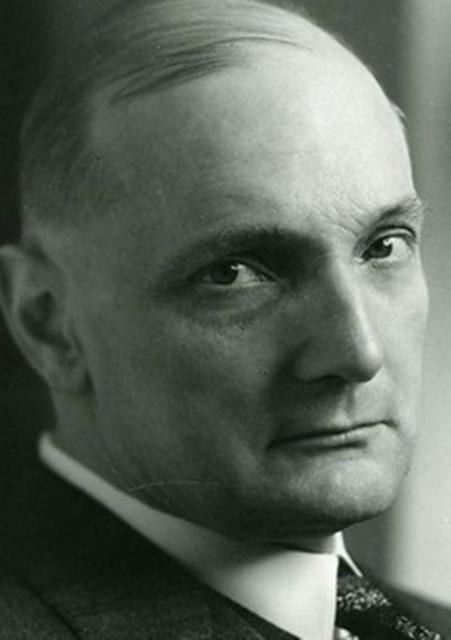
Urban Gad helped turn the silent screen into a stage for bold, emotionally charged performance. A Danish director and screenwriter who built much of his career in Germany, he is best remembered for Afgrunden (The Abyss), the 1910 film that introduced Asta Nielsen to movie audiences and launched one of early cinema’s defining creative partnerships. Gad was also a painter by training, a prolific filmmaker, and an early voice in the debate over cinema as an art form.
From Painting to the Stage
Peter Urban Bruun Gad was born in Korsør, Denmark, on February 12, 1879, into a prominent family. His father, Nicolaus Urban Gad, was a rear admiral, while his mother, Emma Gad, was a writer and playwright. He first pursued visual art, studying in Copenhagen and continuing his training in Paris with the painter Fritz Thaulow, his uncle. A turn toward theater brought him to Copenhagen’s Dagmar Theatre and then the New Theatre, where he worked as a stage director and designer.
The Breakthrough with Asta Nielsen
In 1910 Gad moved from theater into film, first assisting on En Rekrut fra 64 before writing and directing Afgrunden. The drama gave Asta Nielsen her screen debut; her intense, unconventional performance made an immediate impression, and the film’s daring gaucho dance became one of its most talked-about moments. Gad’s ability to shape a film around a magnetic lead helped establish Nielsen as an international star and made him her preferred director.
The pair worked first in Denmark and then in Germany, where a new contract brought them to the Deutsche Bioscop company. Gad wrote and directed a steady run of films featuring Nielsen, including Nachtfalter, Die arme Jenny, Engelein, and Vordertreppe und Hintertreppe. They married in Copenhagen in 1912, and for several years their professional and personal lives were closely intertwined. Their collaboration changed around 1915; the marriage later ended in divorce.
A German Film Career and a Return Home
Gad continued directing after the partnership ended, working with performers including Maria Widal and Hella Moja. His output ranged across melodrama, comedy, and popular adventure, and he became one of the most productive directors in German cinema during the 1910s. Among his later productions were the two-part Christian Wahnschaffe and Hanneles Himmelfahrt, his final German film, released in 1922.
In 1919 Gad published Filmen: Dens Midler og Maal (The Film: Its Means and Aims), a substantial early work of film theory drawing on his practical experience. It set out his belief that cinema could be an art capable of reaching a broad public. His career thus extended beyond directing: he helped shape how filmmakers thought and wrote about their new medium.
The Grand Teatret Years
Gad returned to Denmark in 1922 and became director of Copenhagen’s Grand Teatret, a cinema that became an important venue for major international releases. He directed a few more films, including Lykkehjulet (The Wheel of Fortune, 1926), but then devoted himself to exhibition. He married German actress Esther Westenhagen in 1922. Gad remained associated with the Grand Teatret until his death in Copenhagen on December 26, 1947.
Many of his films have since been lost or forgotten, yet his place in film history remains secure. Afgrunden gave Nielsen her breakthrough, their German productions helped carry Danish talent onto the international screen, and his writing made an early case for cinema as a serious art. His legacy rests in that combination of a star-making collaboration, an ambitious body of silent films, and a lasting commitment to the possibilities of the medium.