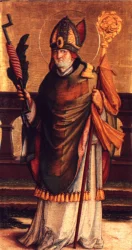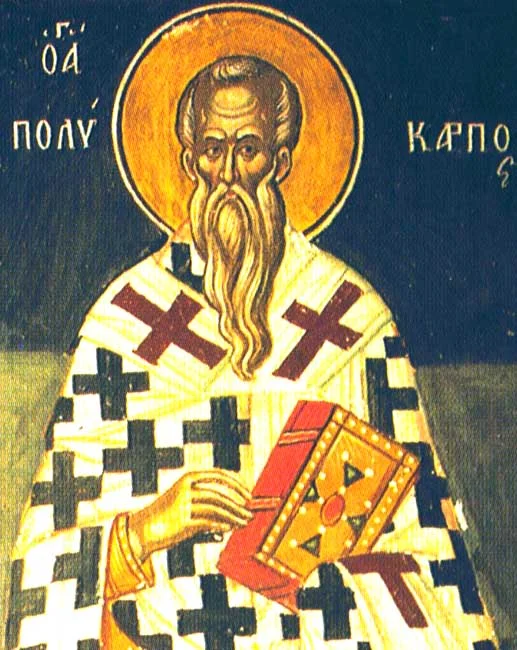
Polycarp
Polycarp of Smyrna was one of the earliest Christian leaders whose life can be glimpsed through both a surviving letter and an account of his death. Remembered as a bishop, teacher and martyr, he stood between the generation that shaped the first Christian communities and the churches that were spreading across the Roman world. His influence endured through his student Irenaeus and through the moving story of his execution, preserved by the church of Smyrna.
A bishop with links to the first Christian generation
The exact dates of Polycarp’s birth and death are debated, but he was an important leader in Smyrna, a prosperous city on the western coast of Asia Minor, in the second century. Irenaeus, who knew him as a young man, later recalled his teaching and said he had been appointed bishop of Smyrna by apostles. That claim reflects the early Church’s understanding of Polycarp as a bridge to its founding generation, though the details of his earliest life are not independently documented.
One important work associated with him is the Letter to the Philippians. Written to a Christian community facing questions of conduct and leadership, it draws on earlier Christian writings and urges a life marked by faith, patience and care for others. The letter is less a polished philosophical treatise than a practical message from a senior pastor who wanted distant communities to remain connected and steadfast.
Polycarp also traveled to Rome late in life and met its bishop, Anicetus. They disagreed about when Christians should celebrate Easter: communities in Asia Minor followed one tradition, while Rome observed another. The two leaders did not settle the difference, but accounts remember that they maintained fellowship and shared communion. The episode captures an early Church that was already diverse, yet still negotiating how unity could coexist with local practice.
Arrest and martyrdom
The story of Polycarp’s final days comes from The Martyrdom of Polycarp, a letter sent by the Christians of Smyrna to another church. It is among the earliest surviving Christian accounts centered on a martyr’s death. According to the letter, Roman authorities demanded that the aged bishop renounce Christ and offer sacrifice to the emperor. Polycarp refused and was condemned to die.
The text describes him as calm before his execution, praying for the community and those who persecuted him. It then recounts his death in dramatic, faith-filled terms, presenting his witness as an imitation of Christ’s suffering. Such details belong to a devotional account rather than a neutral legal record, but the letter offers an unusually early picture of how Christians remembered martyrdom and made it central to communal identity.
The date is also uncertain. The traditional date is around 155, though some chronologies place the execution later, in the 160s. Whatever the exact year, Polycarp’s death became a formative memory for the church in Smyrna and beyond.
A legacy that traveled far
Polycarp’s reputation spread through the writings of Irenaeus, who carried memories of his teaching west to Gaul, and through the martyrdom letter, which circulated among Christian communities. Later writers described him as a link to the apostles; believers honored him as a saint and model of steadfastness.
His historical importance lies in this combination of pastoral care, teaching and remembered courage. Polycarp left few personal details behind, yet his voice survives in a letter and in the recollections of those who knew him. Together, they preserve a portrait of a leader whose influence outlasted the world that put him on trial.