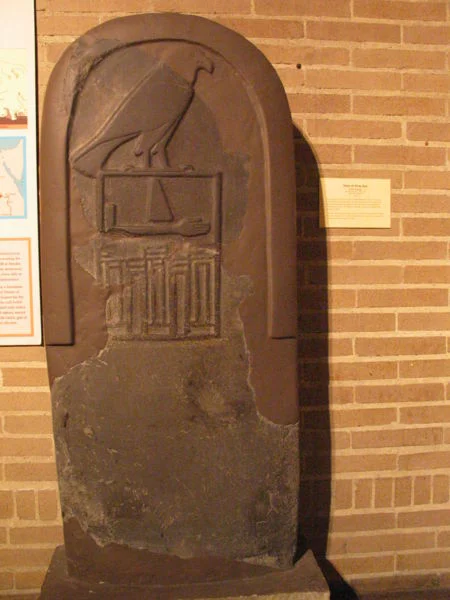
Qa'a
Qa’a was an early Egyptian ruler generally regarded as the final king of the First Dynasty. He lived more than four thousand years ago, and nearly all that can be said about his reign comes from inscriptions, sealings, and archaeological remains rather than narrative histories. His tomb at Abydos provides some of the clearest evidence of his place in Egypt’s early royal tradition.
Kingship in Early Egypt
Qa’a’s Horus name appears on objects and seal impressions from the Early Dynastic Period. His reign is commonly placed around the late fourth millennium BCE, though exact dates and its length remain uncertain. Early Egyptian kingship was associated with the unification and administration of Upper and Lower Egypt, ritual ceremonies, and the maintenance of royal authority across the Nile Valley. Surviving records from Qa’a’s reign are limited, so specific policies or military campaigns cannot be reconstructed with confidence.
The Tomb at Abydos
Qa’a was buried in Tomb Q at Umm el-Qa’ab, the royal cemetery near Abydos. The burial complex is among the largest of the First Dynasty and contained royal stelae bearing his name. Archaeologists have also found seal impressions associated with Hotepsekhemwy, the first generally accepted ruler of the Second Dynasty, at the tomb entrance. These finds are often taken to indicate that Hotepsekhemwy oversaw or was connected with Qa’a’s burial, although details of the transition between dynasties remain debated.
The tomb’s subsidiary burials also reflect funerary practices of early dynastic elites. They provide evidence of the resources and social organization required for royal burial, but the precise status and circumstances of those interred alongside the king are not fully known.
Historical Significance
Qa’a’s reign marks the close of the First Dynasty in most modern chronologies. Later king lists and ancient authors preserve varying names and sequences, making the identification of early rulers complex. Archaeology therefore remains central to understanding this period. Though little is known about Qa’a as an individual, the material record shows a developing Egyptian state with established royal symbols, elaborate burial customs, and dynastic continuity that carried into the Second Dynasty.