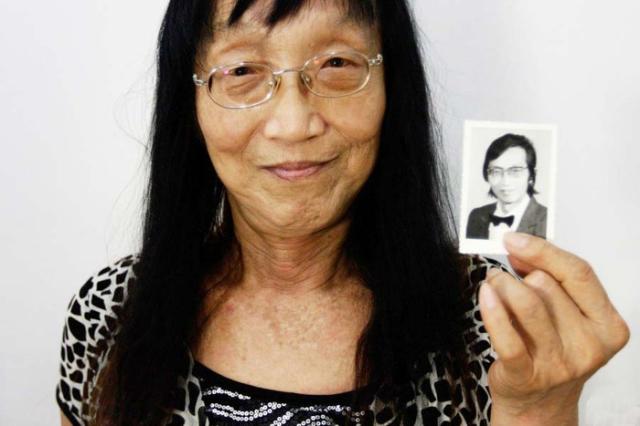
Qian Jinfan
 China
Qian Jinfan
A Scholar of Calligraphy and CollectingBorn in China in 1928, Qian Jinfan built a life that moved between public service and the arts. She worked first at the Bank of China and later at the People’s Bank of China, then held posts connected with publishing and cultural work in Guangdong. In Foshan, she joined the local painting institute and developed a reputation as a calligrapher, art theorist, and collector. Her artistic scholarship focused in part on the calligraphy of Pu Xinyu, the twentieth-century artist also known as Puru.
Qian’s collecting began early and became a lifelong pursuit. In 1948, while working in Beijing, she used part of her savings to buy a set of calligraphic couplets by Pu Xinyu. She treasured the work through decades of upheaval, eventually writing about the artist and his place in modern Chinese calligraphy. Her essay on the historical significance of his calligraphy appeared in the journal Chinese Calligraphy, and she later published books that combined memoir with art criticism.
A Long-Held Identity, Finally Shared
Qian later became widely known as Yi Ling, the name she chose to express her identity as a woman. She described feeling female from childhood but spent most of her life presenting herself publicly as a man. In 2008, at age 80, she began living as a woman, wearing women’s clothing and taking hormones. The following year she wrote to her former employers to explain her decision; in 2010 she formally stated that she identified as a woman.
Her transition unfolded within a family and workplace culture where gender identity was rarely discussed openly. She was married and had a son, and she carefully considered the possible effects on her retirement status and relationships before speaking to her employers. Their response was not an official declaration of support, but her pension and participation in work-related events continued unchanged. Family members needed time to adjust as well.
In 2012, at 84, she spoke publicly about her experience in a major interview. The story drew international attention, and she was described in the press as one of China’s oldest openly transgender women. She used the moment to challenge prejudice and call for equal employment rights for transgender people. Her message connected a deeply personal story with a broader appeal for dignity and fair treatment.
Art, Memory, and Advocacy
Qian’s life is often introduced through the remarkable age at which she began living openly as a woman, but the artistic work that preceded that public moment was substantial in its own right. As a collector, she preserved rare works by Pu Xinyu and later wrote about their aesthetic and historical value. As a calligrapher and critic, she engaged with the traditions of Chinese brushwork while considering how those traditions could be understood in a changing society.
Her public presence also helped make transgender experience more visible in China. By explaining her identity in her own words, she pushed back against the idea that gender variance was a private matter best left unspoken. She argued that transgender people deserved the same opportunity to work and participate in public life as anyone else.
A Life Reclaimed
Qian’s story is unusual not because it followed a simple path, but because it brought together several identities often treated as incompatible: a scholar and collector, a retired public servant, a wife and mother, and a transgender woman. For decades she kept her inner life private while building a serious career in cultural work. In her eighties, she chose to live openly and explain that decision to a national and international audience.
Her legacy rests both in the scholarship and collections she left to the study of Chinese calligraphy and in the example she set by claiming space to live as herself. The late public chapter of her life made her a visible symbol for transgender dignity, while her long commitment to art shows the depth of the cultural life she had built long before the headlines arrived.