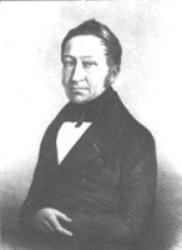
Quintus Curtius Rufus
 Italy
ItalyQuintus Curtius Rufus
Early Life and CareerThe name Quintus Curtius Rufus appears in severalancient Roman historical documents. Still, scholars debate whether these references all refer to the author of "History of Alexander the Great."
Tacitus mentions a certain Curtius Rufus as a notable figure of the Julio-Claudian era. In his "Annals," he notes, "The lineage of Curtius Rufus, who is said by some to have been the son of a gladiator, I shall not affirm as false, yet am ashamed to state as true."
According to Tacitus, Rufus became a quaestor and then a praetor. Emperor Tiberius remarked about Rufus's origins, "Rufus, as it seems to me, was born from himself." Rufus eventually became consul, achieved triumphal honors, and was appointed governor of Africa.
Historical Account
A letter from Pliny the Younger also provides an account of Curtius Rufus.It describes a man who was born under Emperor Augustus, began his career under Tiberius, and became consul in 45 AD during Claudius's reign. He received triumphal honors, commanded Roman forces in Upper Germany, and eventually became governor of Africa under Nero.
Suetonius's list of famous orators from the mid-1st century AD also includes the name Quintus Curtius Rufus.
"History of Alexander the Great"
"History of Alexander the Great" was written in 10 volumes.Only volumes III-X survive with minor gaps. The first two books, which likely covered Alexander's accession to his invasion of Asia Minor, are lost.
The book is one of the most comprehensive extant biographies of Alexander the Great. However, scholars note that Rufus was not a contemporary of Alexander and relied on earlier works, some of which are questionable. The book's tone often praises Alexander while lamenting his lack of moderation, and it contains several factual errors.
Significance and Influence
The earliest surviving manuscripts of the book date back to the 9th-10th centuries.All contain the same omissions, including the first two volumes. The first printed edition of the book appeared in Venice in 1470.
During the Renaissance, Quintus Curtius Rufus's work became highly popular. Cardinal Richelieu reportedly read it during the siege of La Rochelle.
In the 16th-17th centuries, around 100 editions of "History of Alexander the Great" were published. Several plays were also composed based on the book's contents.