Rabit Batulla
Childhood and Early Life
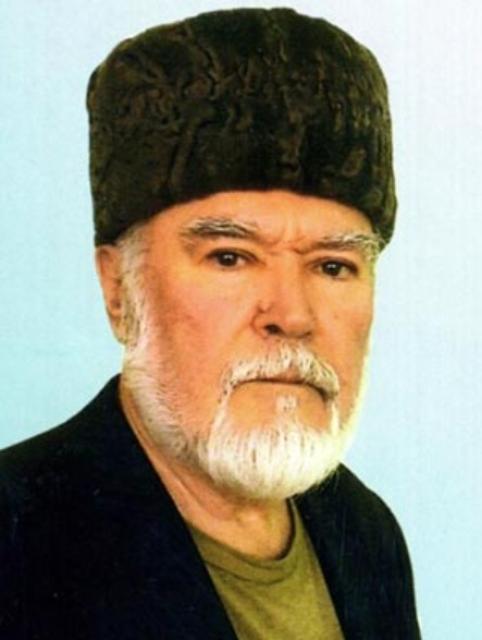
Robert Mukhlisovich Batullin, known as Rabit Batulla, was born on March 26, 1938, in the Tatar village of Nizhnie Luzi. Despite being born to teachers, he grew up with his grandfather in the village of Shikmameyevo and considered it his true home. His family was affluent, owning a garden and livestock, which drew the ire of envious neighbors who wrote denunciations.
During World War II, Batulla's father spent three years as a German prisoner of war. Afterward, he was imprisoned and subjected to surveillance by the NKVD. As a result, his parents were stripped of their land and fired from their teaching jobs, forcing them to work on a collective farm. Batulla himself learned to work from a young age and still identifies as a "rustic" and a "bourgeois in the nobility."
Acting and Directing
Batulla initially dreamed of becoming a pilot, but poor eyesight and a heart condition prevented him. Deterred from teaching by his parents' experiences, he instead auditioned for the Moscow S. Shchepkin Theatre School in 1956 with two friends. After graduating five years later, he joined the Kazan Tatar Academic Theater named after G. Kamal. However, he found limited success as an actor, primarily playing small roles.
Instead, Batulla gravitated towards directing. In 1963, he became director of the puppet theater and television studio in Kazan. Three years later, he studied at the Higher Director's Courses in Moscow. In 1969, he founded the Satire Theater and led it for the next 17 years. Through his directing work, Batulla discovered his passion for writing, which became his true calling.
Literary Career
Under the pseudonym Rabit, derived from his childhood nickname, Batulla published his debut story in 1963. Three years later, he released his first book, "Call Me Durtyuz." Since then, he has authored numerous works, including plays, children's stories, novels, and autobiographical essays.
Batulla writes in Russian, Tatar, Turkish, German, Spanish, and English. He has also translated works, including the Quran. His writings often touch on social and political issues. In the 1970s, he wrote letters to Leonid Brezhnev, advocating for a Tatar literary magazine and protesting the conversion of a mosque into a dormitory. As a result, he fell out of favor with the authorities, and his works stopped being published until the perestroika era.
Despite the setbacks, Batulla continued to write. In 1979, he completed literary courses in Moscow and taught at the theater school and the Institute of Culture in Kazan. At age 53, he obtained a diploma in higher education from the Moscow University of Culture and Arts.
Personal Life
Rabit Batulla was first married to a Russian woman for approximately 15 years. Upon their divorce, he left his two-room apartment to his ex-wife and their two children, a son and a daughter. Since then, he has been vocal in his opposition to interracial marriage.
For over four decades, Batulla has been happily married to Ruziya Batullina, who is 17 years his junior. Together, they have two sons, both of whom are involved in the arts. The elder son, Nurbek Batullin, is a ballet dancer, choreographer, and film actor. The younger son, Baibulat Batulla, is a producer, screenwriter, performer, and director.
Recent Years
In 2023, at age 85, Rabit Batulla starred in the comedy film "Take and Remember" alongside Roza Khairullina and Yunus Tairov. The film, co-written and directed by his younger son Baibulat, portrays the daily lives of an elderly couple in a village. Batulla, in a semi-autobiographical role, played Rasim, a character based on himself. The film was shot in the village where Khairullina worked as a schoolgirl.