Ralph Burns
 USA
USABiography of Ralph Burns
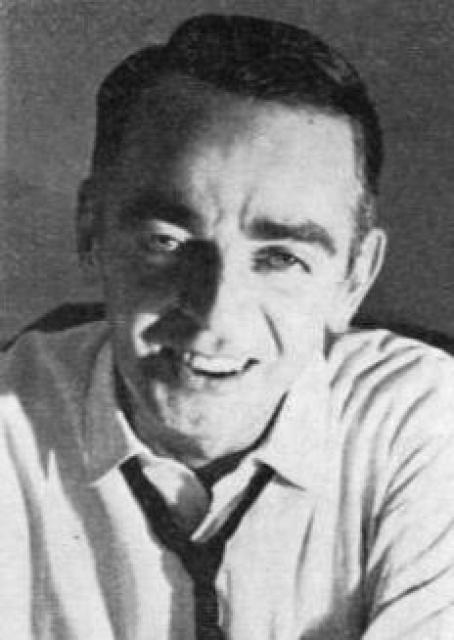
Ralph Burns was an American jazz pianist, composer, conductor, and songwriter. He was born in Newton, Massachusetts in 1922. From a young age, Burns showed talent in playing the piano and in 1938, he enrolled at the New England Conservatory of Music. It was there that he discovered jazz and became fascinated with the works of musicians such as Count Basie, Benny Goodman, and Duke Ellington.
During his time as a student, Burns lived with Frances Wayne, a popular jazz vocalist, and her brother Nick Jerret, who had a jazz band. This is where Ralph began his musical career, playing with legendary musicians like Nat King Cole and Art Tatum.
In the early 1940s, Burns moved to New York where he met Charlie Barnet and started collaborating with him. In 1944, Ralph joined Woody Herman and worked with him for many years. He arranged numerous hits for the band, including "Bijou," "Northwest Passage," and "Apple Honey."
Throughout his career, Burns also had the opportunity to work with other legendary musicians such as Stan Getz, Bill Harris, and Charlie Ventura. In the 1950s, Ralph started working on his own projects, recording with Billy Strayhorn, Lee Konitz, and Ben Webster. His compositions were also performed by Tony Bennett, Johnny Mathis, Aretha Franklin, and Natalie Cole. Burns was responsible for the string orchestration in Ray Charles' famous hits, "Come Rain or Come Shine" and "Georgia on My Mind."
In the 1960s, Burns took a break from studio work and touring and began working on Broadway. He participated in well-known productions such as "Chicago," "Funny Girl," "No, No, Nanette," and "Sweet Charity." In 1971, Ralph ventured into the world of film, assisting in the production of Woody Allen's "Bananas" and serving as the musical editor for Bob Fosse's award-winning film "Cabaret" in the following year.
From the mid-1970s, Burns started composing music for films. He made his debut as a composer in the titles of "Lenny" and "Piaf" in 1974. Burns collaborated with Bob Fosse on several of his films, including the musical film "All That Jazz" in 1979, which received an Oscar nomination. Ralph also worked on films such as "Urban Cowboy," "The Phantom of the Opera," "Perfect," and "Bert Rigby, You're a Fool."
In recognition of his work in the theater, Burns received a Tony Award for Best Orchestrations in 1999 and a Drama Desk Award. In 2004, he was inducted into the New England Jazz Hall of Fame.
Ralph Burns, who hid his homosexuality throughout his life, passed away on November 21, 2001, in Los Angeles, California. He died from pneumonia and complications from a recent stroke.