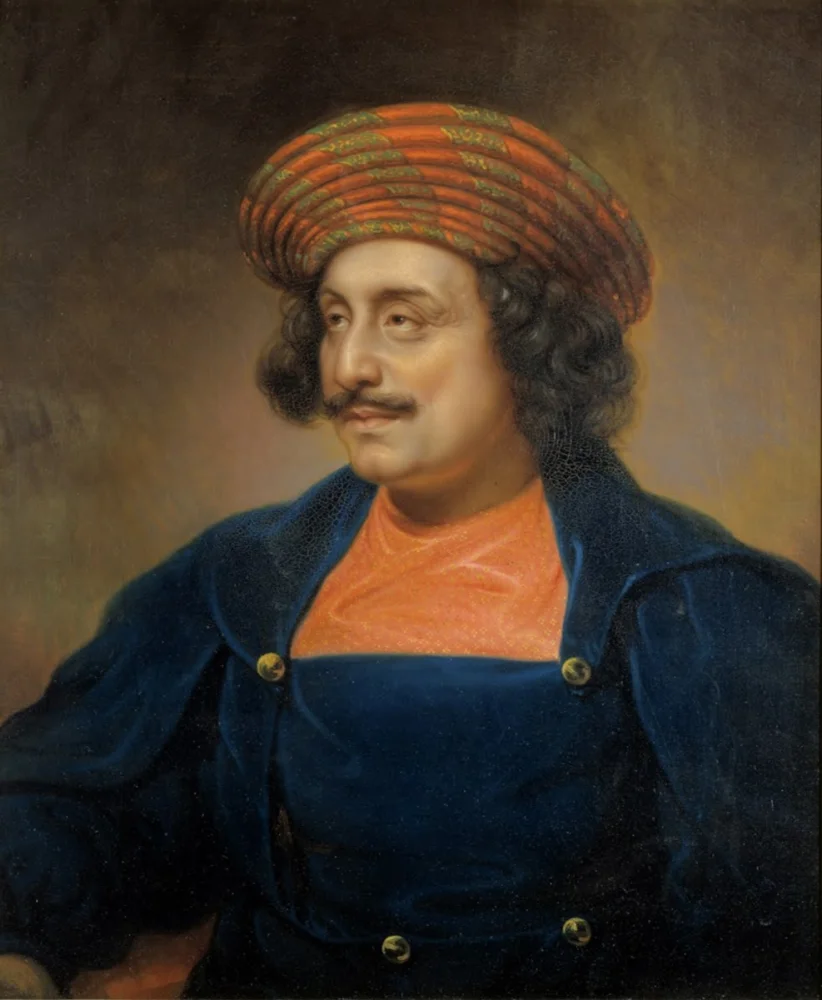
Ram Mohan Roy
Ram Mohan Roy was a reformer who argued that Indian society could draw strength from its own intellectual and religious traditions while embracing new ideas. A scholar of several languages, he wrote about faith, education, women’s rights, and the freedom of the press. His campaign against sati, the immolation of widows on their husbands’ funeral pyres, helped make him one of the most influential public figures of early nineteenth-century Bengal.
A scholar and public thinker
Roy was born on 22 May 1772 in Radhanagar, Bengal, into a Bengali Brahmin family. His education included Sanskrit, Persian, and Arabic, and he later studied English. This wide reading exposed him to Hindu philosophical texts as well as Islamic and European religious thought. He worked for a period in the service of the East India Company, then settled in Calcutta around 1814 and devoted himself increasingly to scholarship and public reform.
Roy’s writing challenged practices he believed were inconsistent with the ethical and monotheistic ideas he found in Hindu scripture. He translated and discussed the Upanishads, wrote in Bengali, Persian, and English, and used newspapers to bring debates to a wider audience. His publications included the Bengali weekly “Sambad Kaumudi” and the Persian newspaper “Mirat-ul-Akhbar.” When the colonial administration imposed restrictions on the press in 1823, he protested against them.
Reform and the Brahmo Sabha
Roy became a prominent opponent of sati, a practice in which some widows were expected or pressured to die on their husbands’ funeral pyres. He argued publicly against it, using scriptural interpretation and appeals to justice and human dignity. In 1829, Governor-General Lord William Bentinck’s regulation made sati illegal in the Bengal Presidency. Roy’s sustained advocacy helped shape the climate for reform, though the legal change also reflected wider public and administrative debates.
He also campaigned for women’s rights, including inheritance rights, and for modern education that combined scientific and practical subjects with Indian learning. In 1828 he helped found the Brahmo Sabha, a congregation devoted to the worship of one God. It became the precursor to the Brahmo Samaj and helped inspire a broader reform movement.
Britain and legacy
In 1830, Roy traveled to Britain as an envoy of the Mughal emperor Akbar II, who had given him the title “Raja.” He presented the emperor’s interests and followed British debates about India and reform. Roy died in Bristol on 27 September 1833 and was buried there.
Remembered as a key figure in the Bengal Renaissance, Roy worked across religious and cultural boundaries while criticizing both social abuses and restrictions imposed by colonial rule. His legacy rests on that combination: a reformer grounded in close study of Indian texts, yet willing to argue for new institutions, public debate, and greater rights for women.