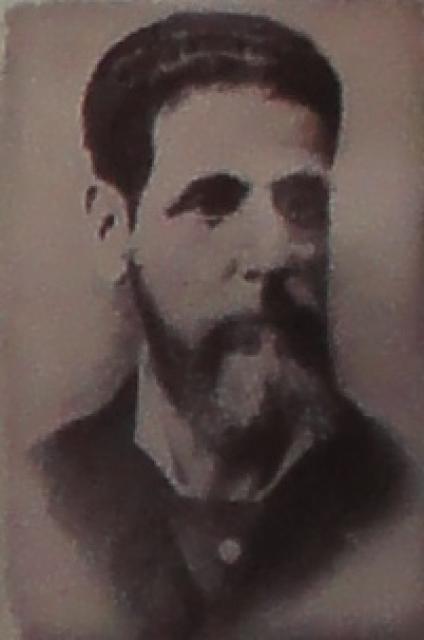
Ramon Marin
 USA
USA- Ramón Marín: A Figure of Puerto Rican History and Culture
- Teaching and Journalistic Career
- Involvement in the Ponce Insurrection
- Political Activism
- Arrests and Imprisonment
- Family and Legacy
Ramón Marín: A Figure of Puerto Rican History and Culture
Early Life and EducationRamón Marín was born in Arecibo, Puerto Rico, on an unknown date in the 19th century. His father was Vicente Marín and his mother was Rosa, an enslaved woman. After attending the local grammar school, Marín moved to Cabo Rojo, Puerto Rico, at the age of 18 to become a teacher.
Teaching and Journalistic Career
It was in Cabo Rojo that Marín began his writing career. His first work, an essay on public education, was published on August 20, 1853, in the newspaper "El Eco Ponceño." In 1856, Marín received his official teaching certificate. Later, in 1860, he moved to Yabucoa, Puerto Rico, where he founded his own school. In 1866, Marín converted his school into the island's first night school for adults.
Involvement in the Ponce Insurrection
In the late 1860s, Marín relocated to Ponce, influenced by the Grito de Lares, a rebellion against Spanish colonial rule. In Ponce, he met various pro-independence figures, including Manuel Gregorio Tavárez and Manuel Zeno Gandia. On May 21, 1874, Marín founded his first newspaper, "El Avisador." In May 1875, he launched another publication, "La Crónica de Ponce."
Political Activism
Marin played an active role in Puerto Rican politics. In 1880, he became the director of Roman Baldorioty de Castro's newspaper "El Pueblo," which advocated for autonomy from Spain. In December 1885, Marín published his most famous work, the 72-page pamphlet "Las Fiestas Populares de Ponce."
Arrests and Imprisonment
In October 1881, Marín co-founded the daily newspaper "El Pueblo," which was quickly suppressed by the colonial government for its critical stance. Another newspaper launched by Marín, "El Popular," suffered the same fate after its launch on October 7, 1887.
In 1887, Marín and Baldorioty de Castro attempted to travel to Spain to denounce the oppression of the Puerto Rican people. However, they were arrested by colonial authorities and imprisoned in San Juan.
Family and Legacy
Marín married María Amalia Castilla on September 5, 1856. They had five sons and two daughters. One of Marín's daughters, Luisa, later gave birth to Luis Muñoz Marín, who became Puerto Rico's first democratically elected governor.
Ramón Marín's contributions to Puerto Rican history, literature, and politics made him a significant figure in the island's struggle for autonomy and independence. His writings and activism continue to inspire Puerto Ricans to this day.


