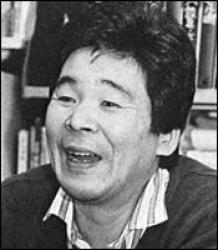
Rayner Fasbinder
 Germany
- Rainer Werner Fassbinder: A Cinematic Trailblazer
- Early Life and Education
- Theatrical Beginnings
- Cinematic Debut
- Melodramatic Turn
- International Recognition
- Political Activism
- Major Works
- Final Days
- Legacy
Rainer Werner Fassbinder: A Cinematic Trailblazer
Rainer Werner Fassbinder, the German auteur, was born on May 31, 1945, in Bavaria, to Dr. Helmut Fassbinder and Lieselotte Eder, a translator. After his parents' divorce in 1951, Fassbinder remained with his mother, who later performed supporting roles in many of his films.
Early Life and Education
Fassbinder attended various schools before completing his studies in 1963 without a diploma. He lived briefly with his father in Cologne and then pursued acting at the Fridl Leonhard Studio in Munich in 1964. There, he met Hanna Schygulla, who became his muse and frequent collaborator.
Theatrical Beginnings
Fassbinder's passion for theater led him to write plays and join Munich's "Action Theater" in 1967. After its closure, he co-founded the "Antiteater" with Peer Raben, Kurt Raab, and Irm Hermann, becoming its leader.
Cinematic Debut
Fassbinder's first feature films, "Love Is Colder Than Death" (1969) and "Katzelmacher" (1969), were produced with the "Antiteater" ensemble. His early work exhibited influences from Godard, Brecht, and Straub.
Melodramatic Turn
In the early 1970s, seeking to broaden his audience, Fassbinder ventured into melodramas, inspired by the works of Douglas Sirk. This fusion of melodrama and politics proved successful with "The Merchant of Four Seasons" (1971), his first commercially viable film.
International Recognition
Fassbinder's international acclaim came with "Fear Eats the Soul" (1974), which screened in competition at the Cannes Film Festival and won the International Catholic Cinema Jury Prize. A retrospective of his films was held at the French Cinematheque in 1974.
Political Activism
Fassbinder's participation in "Germany in Autumn" (1978) reflected his active support of left-wing causes. He denounced police brutality and criticized the treatment of political prisoners.
Major Works
"The Marriage of Maria Braun" (1979) is considered Fassbinder's masterpiece, capturing the post-war German experience. The television series "Berlin Alexanderplatz" (1980) was an ambitious adaptation of Alfred Döblin's novel. "Despair" (1978), an adaptation of Vladimir Nabokov's novel, was Fassbinder's first English-language film.
Final Days
Fassbinder's final film, "Querelle" (1982), was an adaptation of Jean Genet's novel about the homosexual adventures of a sailor. His unrestrained lifestyle, fueled by drug abuse, contributed to his untimely death at age 37 from a cocaine overdose.
Legacy
Rainer Werner Fassbinder's prolific body of work, consisting of 43 films, a television series, and numerous plays, has cemented his status as one of the most influential figures in the German New Wave. His films continue to explore themes of social justice, political corruption, and human frailty, leaving an enduring legacy in world cinema.