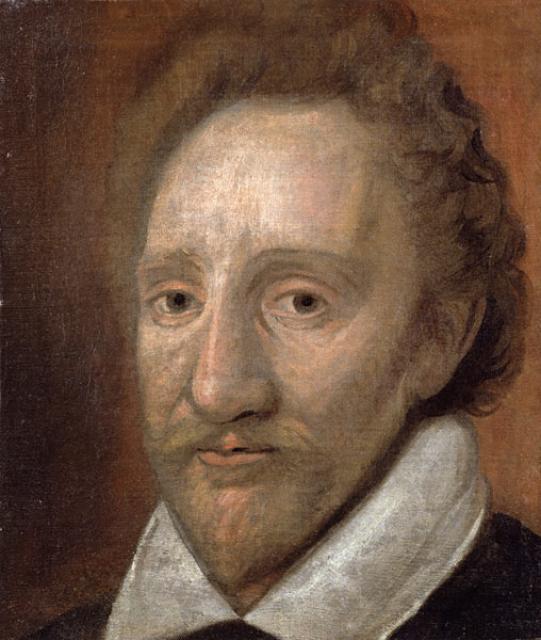
Richard Burbage
 Great Britain
Biography of Richard Burbage
Early Life and CareerRichard Burbage was born on January 6, 1568, in London. He was the son of James Burbage, a carpenter who later became an actor and theatre impresario, known for building the famous theatre, The Theatre. The Theatre was the first purpose-built theatre in England, and the second theatre to have a permanent company of actors. In the Elizabethan era, most plays were performed on improvised stages, and theatre troupes were itinerant, traveling from city to city.
Burbage's elder brother, Cuthbert Burbage, was a popular dramatic actor in his youth and later became a successful theatre agent, playing a key role in the construction of Shakespeare's Globe Theatre.
Acting Career
Richard Burbage achieved popularity in his early twenties, but there is little documentary evidence about his early career. It is believed that he was part of the theatrical company of the Earl of Leicester, performed with the Admiral's Men in 1590 and Lord Strange's Men in 1592, and acted with the actors of the Earl of Pembroke in 1593. However, Burbage gained the most fame through his work with the theatrical company led by William Shakespeare, known as the Lord Chamberlain's Men. In 1603, after James I ascended the throne, the company was renamed the King's Men.
Burbage played leading roles in the first performances of many of Shakespeare's plays, including Hamlet, Othello, Richard III, and King Lear. However, due to his high demand, he also appeared in plays by other great contemporaries of Shakespeare, such as Ben Jonson's comedies Volpone and The Alchemist, John Marston's satirical comedy The Malcontent, John Webster's tragedy The Duchess of Malfi, and the tragicomedy The Maid's Tragedy by Francis Beaumont and John Fletcher.
Later Life and Legacy
After his father's death in February 1593, Richard and his brother Cuthbert became embroiled in a legal dispute to protect the family's interests in two London theatres, ultimately leading them into legal battles. They managed to retain Blackfriars Theatre, while the second theatre, simply called The Theatre, was dismantled because the brothers could not reach an agreement with the landowner Giles Allen. Everything that remained of The Theatre was transported to a new location on the south side of the Thames, and the newly constructed theatre was named the Globe Theatre.
Richard Burbage had at least eight children and maintained a close working and personal relationship with his brother throughout his life. After his husband's death, his widow Winifred remarried Richard Robinson, a member of the King's Men company.
Unlike Allen, Shakespeare, and many of their colleagues, Burbage never retired from the stage and continued performing until his death on March 13, 1619. He was not as successful an entrepreneur as Allen and Shakespeare, and it is said that he left his widow with around £300 worth of property, a much smaller fortune compared to his more fortunate stage companions. Richard Burbage was buried in St Leonard's Church in Shoreditch, near The Theatre. Although his grave is now lost, a monument was erected in later centuries to commemorate him and his brother Cuthbert.