Richard Fred Heck
 USA
USABiography of Richard Heck
Richard Heck was an American chemist and Nobel laureate in Chemistry for the year 2010. He was the discoverer and researcher of the so-called "Heck reaction" - a method that utilizes palladium for catalyzing chemical reactions that combine aryl halides with alkenes. On October 6, 2010, Heck received the Nobel Prize, sharing the fame and monetary reward with Japanese chemists Ei-ichi Negishi and Akira Suzuki, who also made significant contributions to the analysis of palladium's influence on organic reactions.
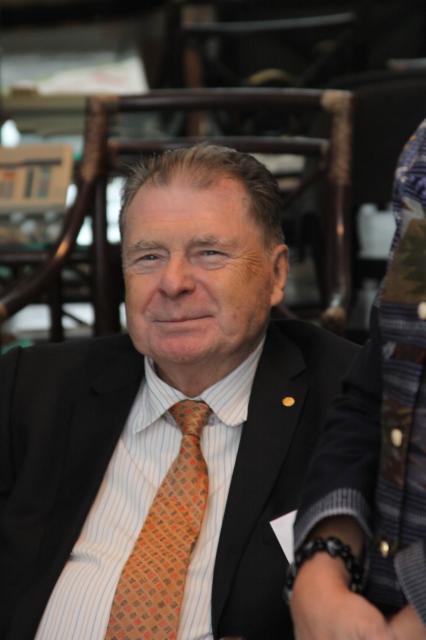
Early Life and Education
Richard was born in Massachusetts, United States. He obtained his higher education at the University of California, Los Angeles (UCLA). In 1952, Heck earned his bachelor's degree, and in 1954, he obtained his Ph.D. His doctoral advisor was renowned American chemist Dr. Saul Winstein.
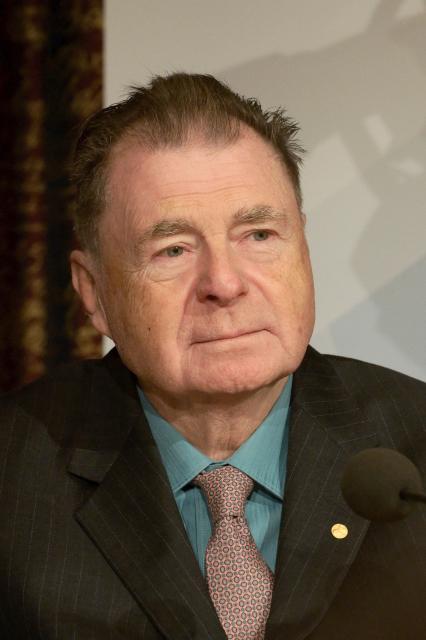
Career and Achievements
After completing his education, Richard worked in Zurich, Switzerland for some time before returning to Los Angeles. In 1957, he was invited to work at the "Hercules" corporation in Wilmington, Delaware. He worked in the corporation's research department and was so effective that he was offered a position on the chemistry and biochemistry faculty at the University of Delaware in 1971. Richard taught at Delaware as a professor for several years before retiring in 1989.
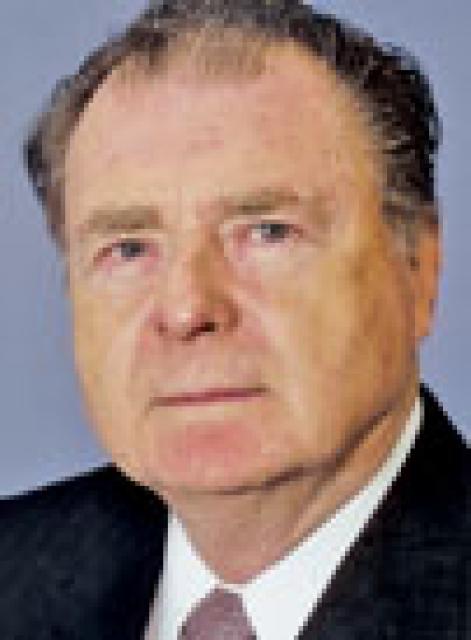
The research that led to the discovery of the Heck reaction, also known as the Mizoroki-Heck reaction, began in the late 1960s when Richard was studying the formation of alloys based on arylmercury with olefins, using palladium as a catalyst. The results of his research were published in a series of seven articles in the Journal of the American Chemical Society.
In the early 1970s, independently of each other, Mizoroki and Heck reported experiments using less toxic aryl halides as one of the reagents. Richard continued to actively conduct research in this area, improving the process and gradually transforming it into a powerful synthesis method for organic compounds.
One of the most significant applications of Heck's discovery was the use of palladium in alkyne and aryl halide reactions. This reaction is widely used for fluorescent labeling of DNA, allowing for automated analysis of DNA element sequences and facilitating genomic research. However, the importance of this reaction was not immediately apparent. In 1982, Heck published a 45-page material describing all possible variations of the process. By 2002, the practical applications of the intermolecular Heck reaction filled 377 pages, and it is currently considered one of the most popular methods for forming carbon-carbon bonds in organic synthesis.
Even after leaving the University of Delaware in 1989, Richard retained the title of honorary professor in the chemistry and biochemistry department. In 2005, he received the Wallace H. Carothers Award for creative applications of chemistry in generating substantial income. In 2006, he was awarded the Herbert C. Brown Award in the category of Creative Research in Synthetic Methods.
The highest accolade Heck received was undoubtedly the Nobel Prize. Currently, Richard has retired from active scientific work and plans to spend his remaining days in the Philippines.