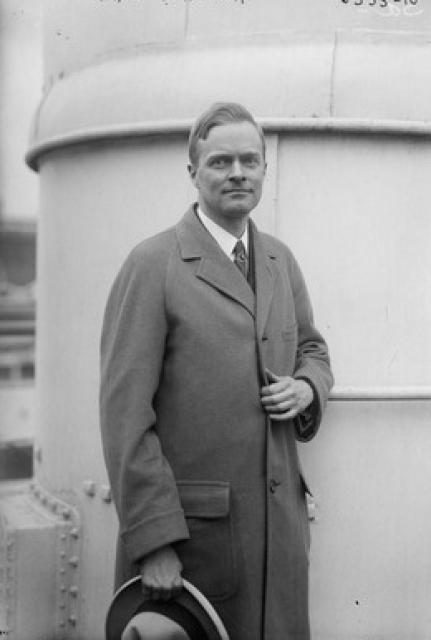
Richard Ranger
 USA
USA- Richard H. Ranger: Electrical Engineer and Innovator
- Inventions and Innovations
- World War II Contributions
- Post-War Innovations
- Later Life and Legacy
Richard H. Ranger: Electrical Engineer and Innovator
Early Life and EducationRichard Howland Ranger was born on June 13, 1889, in Indianapolis, Indiana. He served in the U.S. Army Signal Corps during World War I, rising to the rank of major. After the war, Ranger attended the Massachusetts Institute of Technology (MIT) from 1919 to 1923.
Inventions and Innovations
As an engineer for the Radio Corporation of America (RCA), Ranger invented the wireless photo radiogram in 1924, a precursor to modern facsimile machines. The first image transmitted using this invention was a photograph of President Calvin Coolidge, sent from New York to London in November 1924. The product became commercially available two years later.
In 1930, Ranger founded Rangertone, Inc. in Newark, New Jersey. The company marketed the Rangertone Organ, an electronic organ. Ranger also developed an automatic chime machine for NBC in 1932 and experimented with creating the sound of church bells through electronic systems.
World War II Contributions
During World War II, Ranger returned to the U.S. Army Signal Corps as a colonel and was responsible for radar and communications in Orlando, Florida. He later traveled to Europe with the Field Information Agency, Technical (FIAT), where he studied German advancements in electronics. His research led to several technical reports on electrical components, communications, television, and most notably, magnetic tape recording.
Post-War Innovations
After the war, Ranger continued his work on magnetic tape recording, developing his own device based on German technology. He demonstrated its potential to various parties, including the Institute of Radio Engineers, National Broadcasting Company (NBC), RCA, and the American Institute of Electrical Engineers. Bing Crosby also witnessed the device's capabilities.
Ranger's work on record control later improved the synchronization of sound and picture in motion pictures. The Academy of Motion Picture Arts and Sciences awarded him an Oscar in 1956 for the development of a film sound reproducer and sound and picture synchronizer.
Later Life and Legacy
Richard H. Ranger passed away on January 10, 1962. He was inducted into the New Jersey Inventors Hall of Fame in 1997. His inventions and innovations continue to have a lasting impact on the fields of electronics and entertainment.