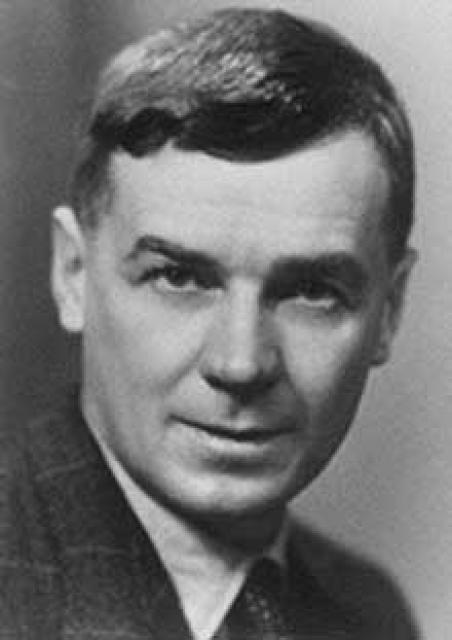
Richard Synge
 Great Britain
- Early Life and Education
- Pioneering Research in Glycoproteins and Chromatography
- Development of Partition Chromatography
- Nobel Prize for Discoveries in Chromatography
- Subsequent Career and Impact
Early Life and Education
Frederick Sanger, an English biochemist, was born on August 13, 1918, in Rendcomb, Gloucestershire, England. He was the eldest child and the only son of Laurence Millington Sanger, a stockbroker, and Catherine Charlotte Swann.
Sanger attended Winchester College in Hampshire, where he earned a scholarship to study classics at Trinity College, Cambridge University. However, influenced by his great-uncle, he switched to biochemistry and matriculated at Trinity College in 1933. An additional scholarship allowed him to continue his studies at the Cambridge Biochemical Laboratory in 1936.
Pioneering Research in Glycoproteins and Chromatography
For the next three years, Sanger focused on investigating glycoproteins. During this time, he discovered differential affinities of acetylated amino acids for water and chloroform. However, this difference proved insufficient for separation.
Inspired by his laboratory supervisor, C. Martin, Sanger collaborated with A. Martin, a senior Cambridge student known for his ability to separate complex chemical mixtures. Together, they explored the countercurrent distribution technique to separate amino acids. This method involves repetitively partitioning the mixture between two immiscible solvents moving opposite directions.
Although initial attempts at countercurrent extraction were unsuccessful, the method was later refined and automated by L. Craig in 1944.
Development of Partition Chromatography
In 1938, Martin moved to the University of Leeds, where Sanger followed him the next year with the financial support of the International Wool Secretariat. Sanger continued his doctoral research in protein analysis in Leeds.
In 1941, Martin and Sanger applied the principle of countercurrent distribution to the technique of chromatography. They used a column of silica gel, which had a strong affinity for water, as the stationary phase and chloroform as the mobile phase. Methyl orange served as the indicator.
They termed the approach partition chromatography since it combined the principles of chromatography with the partitioning of solutes between two solvents. The carrier used to pack the column was inert and merely served to hold one of the phases. This method proved to be a highly effective means of separating amino acids.
Nobel Prize for Discoveries in Chromatography
Sanger received his doctoral degree in 1943 and joined the staff of the Lister Institute of Preventive Medicine in London as a biochemist. While working on the analysis of peptide antibiotics, he continued to collaborate with Martin on improving the partition chromatography method.
Martin and Sanger found that cellulose was another suitable water-imbibing medium. This led to the development of paper chromatography in 1944, which used filter paper as the substrate. A further refinement, two-dimensional paper chromatography, involved successive separations in two perpendicular directions using different solvent systems, enabling complex mixtures to be analyzed economically and effectively.
Sanger's pioneering work in chromatography earned him, along with Martin, the Nobel Prize in Chemistry in 1952 "for the development of partition chromatography."
Subsequent Career and Impact
After receiving the Nobel Prize, Sanger continued his research in various capacities. He served as Head of the Division of Protein and Carbohydrate Chemistry at the Rowett Research Institute in Aberdeen, Scotland, investigated animal nutrition, and purified intermediate products of protein metabolism.
Sanger's contributions to chromatography revolutionized biochemistry and related disciplines. It enabled scientists to analyze and separate complex mixtures, unlocking new avenues of research in areas such as amino acid sequencing, protein distribution, enzyme action, carbohydrate analysis, and drug development.
Sanger remained active in research until his retirement. He passed away on November 19, 2013, leaving behind a legacy of scientific excellence and innovation.




