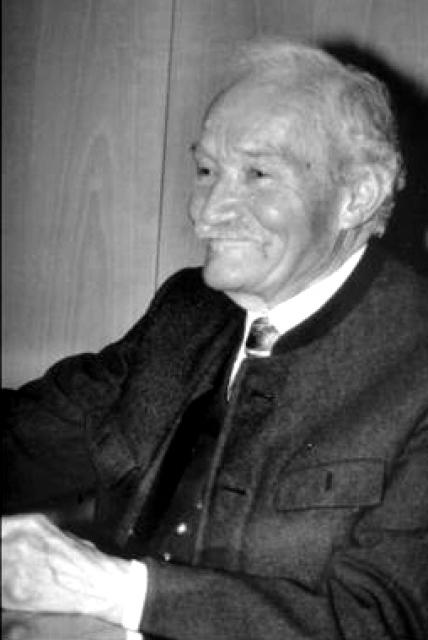
Richard Wolfram
 Germany
- Richard Wolfram: A Life of Folklore, Music, and Nazi Involvement
- Research and Collaboration
- Nazi Membership and Research
- Academic Career and Musicological Interests
- Involvement in Ahnenerbe and Norway
- Post-War Career
- Legacy
Richard Wolfram: A Life of Folklore, Music, and Nazi Involvement
Early Life and EducationRichard Wolfram was born in Vienna, Austria, in 1901. He studied Germanic philology, Scandinavian languages, and literature at the University of Vienna from 1920 to 1926. He began teaching Swedish at the university in 1928.
Research and Collaboration
Wolfram gained a keen interest in folklore and collaborated with the Southeast German Research Society (S?dostdeutschen Forschungsgemeinschaft) at the Museum of Ethnology in Vienna. He also became a correspondent for Swedish newspapers, writing about Austrian events from a National Socialist perspective.
Nazi Membership and Research
In 1932, Wolfram joined the Nazi Party (NSDAP). He became involved in the anti-Semitic "Folklore Society" in 1937. From 1938, he led the research department for German folklore at the Nazi think tank Ahnenerbe.
Academic Career and Musicological Interests
Wolfram obtained his doctorate in 1936 with a dissertation on "Sword Dances and Male Unions." He was appointed extraordinary professor of German folklore at the University of Vienna in 1939. Wolfram also pursued musicology, specializing in Germanic sword dances as symbols of Nordic male bonds.
Involvement in Ahnenerbe and Norway
In 1942, Wolfram joined the scientific staff of the Ahnenerbe outpost in Oslo. He searched for and seized cultural artifacts. In 1944, he was dispatched to Norway to study Scandinavian folklore.
Post-War Career
After the war, Wolfram was temporarily banned from teaching. He resumed teaching in 1954 and regained his professorship in 1959. Wolfram became director of the Institute of Folklore at the University of Vienna in 1961. He was appointed full professor of Austrian and European folklore in 1963.
Legacy
In 1985, the Richard Wolfram Research Institute was established at the University of Salzburg. While his academic contributions in folklore and musicology were significant, his involvement with the Nazi regime remains a complex and controversial legacy.




