Robert Bellarmine
 Italy
Italy- Early Life and Education
- Jesuit Career and Theological Influence
- Papal Advisor and Inquisitor
- Involvement in the Giordano Bruno and Galileo Trials
- Bishop and Cardinal
- Legacy and Recognition
- Personal Qualities and Interests
- Epilogue
Early Life and Education
Roberto Bellarmine, born on October 4, 1542, hailed from a humble aristocratic family in Montepulciano, Tuscany. His maternal uncle, Marcello Cervini, became Pope Marcellus II in 1555. Bellarmine received his early education at a Jesuit college in Rome, excelling in poetry both in Italian and Latin.
Jesuit Career and Theological Influence
In 1560, Bellarmine joined the Jesuit order and gained renown as a formidable theologian. He taught literature and astronomy, and his mastery of theology led him to become a professor of controversial theology at the Collegium Romanum in 1576. His work, "Disputationes," earned him recognition as a defender of Catholic doctrine.
Papal Advisor and Inquisitor
During the 1580s, Bellarmine played a pivotal role as a theological consultant to Pope Gregory XIII and the Grand Inquisitor, Giulio Santori. Pope Sixtus V's disapproval forced Bellarmine to enter seclusion. However, after Sixtus's death, he returned to prominence under Pope Clement VIII, becoming a close papal advisor. In 1598, Bellarmine was elevated to the Cardinalate.
Involvement in the Giordano Bruno and Galileo Trials
As a leading theologian, Bellarmine was deeply involved in the trial of Giordano Bruno, who was condemned as a heretic and burned in 1600. Subsequently, Bellarmine played a key role in the first trial against Galileo Galilei in 1613. While he respected Galileo's scientific work, he maintained that its heliocentric theory contradicted Biblical teachings.
Bishop and Cardinal
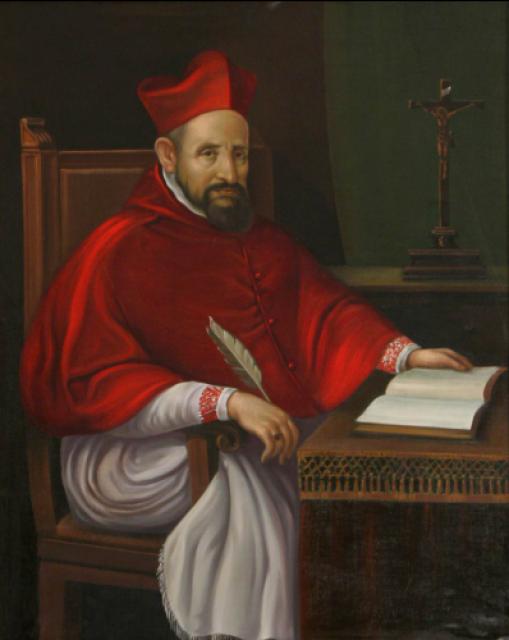
In 1602, Bellarmine was appointed Archbishop of Capua. Despite his senior position, he was known for his humility, visiting parishes regularly and tending to the needy. After retiring from the archdiocese, Bellarmine served in various Roman Congregations, including the Holy Office, where he continued to wield considerable influence as the Grand Inquisitor.
Legacy and Recognition
Bellarmine's prodigious writings, including his contributions to Catholic catechism and devotions, left an enduring mark on the Catholic Church. In 1930, he was canonized as a saint. His writings continue to be studied and revered by Catholic scholars and theologians worldwide.
Personal Qualities and Interests
Despite his formidable reputation, Bellarmine was known for his exceptional character. He exhibited humility, kindness, and a love of music. His ability to connect with others made him a respected figure both within and outside the Church.
Epilogue
Roberto Bellarmine, the Jesuit cardinal and Grand Inquisitor, left an indelible legacy on Catholic theology and history. His writings and contributions shaped Catholic thought for centuries, while his personal qualities continue to inspire believers and scholars alike.