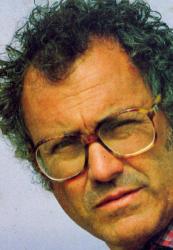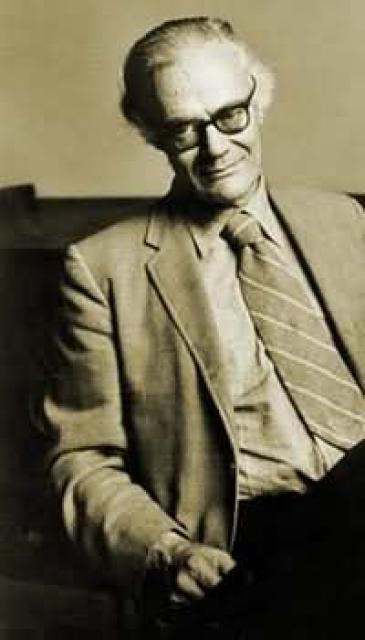
Robert Louell
 USA
USAEarly Life and Education
Robert Lowell, an American poet, playwright, and literary critic renowned as "perhaps the most significant American poet of the latter half of the 20th century," was born on March 1, 1917, in Boston, Massachusetts. Descended from a privileged and prominent family, he inherited a rich literary legacy from his ancestors James Russell Lowell and Amy Lowell.
Lowell received his education at Harvard University and Kenyon College, where he studied philology. Embracing pacifism, he refused military service during World War II, serving a brief prison sentence as a conscientious objector.
Literary Beginnings
At the age of twenty, Lowell had already produced poems that would later be included in his debut collection, "Land of Unlikeness" (1944). His breakthrough came with "Lord Weary's Castle" (1947), which garnered him the Pulitzer Prize. Gradually, his poetry became less formal, discarding traditional rhyme and meter.
Confessional Poetry
Lowell's writing emerged as a paradigm of confessional poetry, a genre characterized by the poet's direct and personal address to the reader. In his work, he sought to develop a distinctive poetic "voice," exploring themes of loss, grief, and the complexities of human nature.
Major Works
Among his most significant works is "Life Studies" (1959), which drew comparisons to T. S. Eliot's "The Waste Land." In "History" (1973), Lowell turned to historical events, believing they held profound metaphysical significance and could illuminate national character.
Later Years and Legacy
Lowell's "Dolphin" (1974) marked his second Pulitzer Prize win. He published a collection of his selected poems in 1976. His prolific career as a translator has been met with mixed reviews.
Robert Lowell passed away from a heart attack in a New York City taxi on September 12, 1977. His poetry continues to influence Anglophone culture, leaving an enduring legacy that interrogates the depths of human experience and the nature of history.