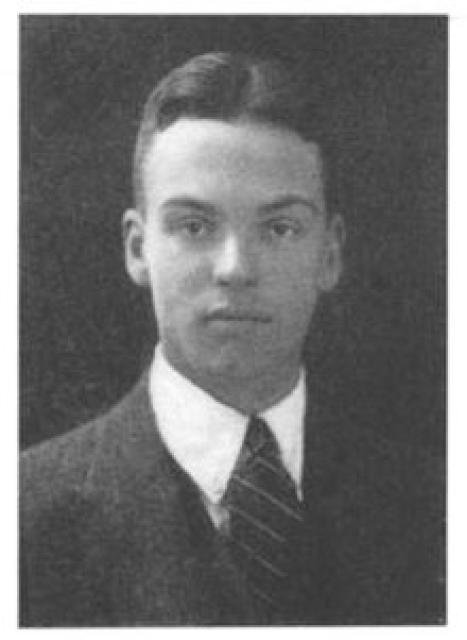
Robert Maynard Hutchins
 USA
USA- Robert Maynard Hutchins (1899-1977)
- Yale University and Legal Career
- Presidency of the University of Chicago (1929-1945)
- Academic Freedom and Intellectual Rigor
- Financial Challenges and Legacy
- Post-University Career
- Center for the Study of Democratic Institutions
- Educational Philosophy
- Criticisms of American Education
- Legacy
Robert Maynard Hutchins (1899-1977)
Early Life and EducationRobert Maynard Hutchins was born in Brooklyn, New York, in 1899. Raised in a devout Presbyterian family, Hutchins attended Oberlin Academy and Oberlin College, where he was influenced by the evangelical ideals of truth and hard work. In 1917, he joined the ambulance service of the United States Army, serving in Italy during World War I.
Yale University and Legal Career
After the war, Hutchins enrolled at Yale University, where he earned his bachelor's degree in 1921 and his law degree in 1925. While at Yale Law School, he became a vocal advocate for the emerging field of legal realism, which sought to integrate the findings of psychology, sociology, and logic with law.
Presidency of the University of Chicago (1929-1945)
In 1929, at the age of 30, Hutchins became the youngest president of the University of Chicago. Over the next 16 years, he implemented sweeping reforms that challenged conventional notions of education. Hutchins's most famous reforms centered on the undergraduate college, which he transformed into a new educational system based on the Great Books, Socratic dialogue, comprehensive examinations, and early college admission.
Academic Freedom and Intellectual Rigor
Hutchins was a staunch defender of academic freedom. He vigorously opposed attempts to silence dissenting voices on campus, arguing that the best way to defeat communism was through open debate and critical analysis. He also eliminated fraternities and religious organizations, believing they distracted from the intellectual mission of the university.
Financial Challenges and Legacy
Despite the intellectual success of Hutchins's reforms, they also proved financially unsustainable. The university's enrollment and financial support declined, leading to criticism from the business community and donors. In 1945, Hutchins stepped down as president and became chancellor of the university until 1951.
Post-University Career
After leaving the University of Chicago, Hutchins became the head of the Ford Foundation. He used the foundation's vast resources to support education, establishing the Fund for the Advancement of Education and the Fund for Adult Education.
Center for the Study of Democratic Institutions
In 1959, Hutchins founded the Center for the Study of Democratic Institutions. The center brought together a community of scholars to analyze and discuss the complex issues facing democratic societies.
Educational Philosophy
Throughout his career, Hutchins remained a firm believer in the use of selected books known as the Great Books as an educational tool. He argued that these works provided a foundation for liberal education and protected teachers from political interference.
Criticisms of American Education
In his book "The University of Utopia," Hutchins criticized the state of American education. He believed that universities had become mere trade schools, sacrificing intellectual development in favor of professional training. He also argued that education had become overly specialized, depriving students of the opportunity for meaningful interdisciplinary dialogue.
Legacy
Robert Maynard Hutchins's educational reforms left a lasting mark on higher education. The Great Books program he championed continues to be a staple in university curricula around the world. Hutchins's unwavering commitment to academic freedom and intellectual excellence remains an inspiration to educators and students alike.