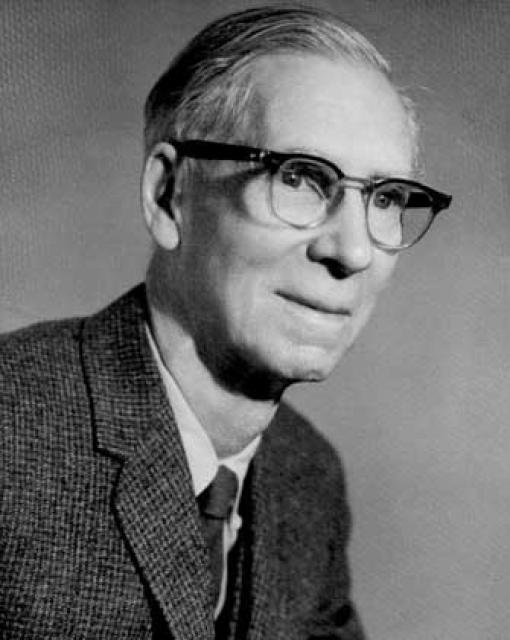
Robert Morrison MacIver
 USA
Robert Morrison MacIver was a Scottish-born sociologist and political philosopher whose career helped shape American social science. A teacher and prolific author, he explored how communities form, how social institutions develop and how democratic government can balance public order with individual freedom.
Education and early career
MacIver was born on April 17, 1882, in Stornoway on the Isle of Lewis, Scotland. He studied classics at the University of Edinburgh and then at Oriel College, Oxford, where he completed a first-class degree in Greats in 1907. His early academic work joined classical political thought with a growing interest in modern sociology.
He began teaching at the University of Aberdeen, first in political science and later in sociology. His early book *Community: A Sociological Study* (1917) developed an influential distinction between community and association: community described a shared life and common setting, while associations were organizations formed to pursue particular interests. The distinction helped him explain social life as something broader than formal institutions.
North American scholarship
In 1915, MacIver moved to Canada to teach at the University of Toronto. During the First World War, he also served as vice-chair of the Canada War Labor Board. He later joined Columbia University in New York, where he became Lieber Professor of Political Philosophy and Sociology and taught from 1929 to 1950.
MacIver wrote on political power, the state, social change and democratic institutions. His books included *The Modern State* (1926), *Society: A Textbook of Sociology* (1931, later revised with Charles Page) and *The Web of Government* (1947). Across these works, he argued that government and society are interdependent but not identical: the state is a political organization within a wider social life, and its authority must be judged by the human purposes it serves.
He served as president of the American Sociological Society in 1940. His approach combined theory with historical and ethical questions, pushing against the idea that society could be understood through measurement alone.
Leadership and later life
After retiring from Columbia, MacIver remained active in academic life. He served as acting president and then president of the New School for Social Research in the 1960s, later becoming its chancellor. He continued writing into old age, including the memoir *As a Tale That Is Told* (1968).
MacIver died in New York City on June 15, 1970. His work on community, the state and social organization influenced generations of sociologists and political thinkers. He is remembered for treating social institutions not as abstract machinery but as human arrangements whose value depends on the lives they make possible.


