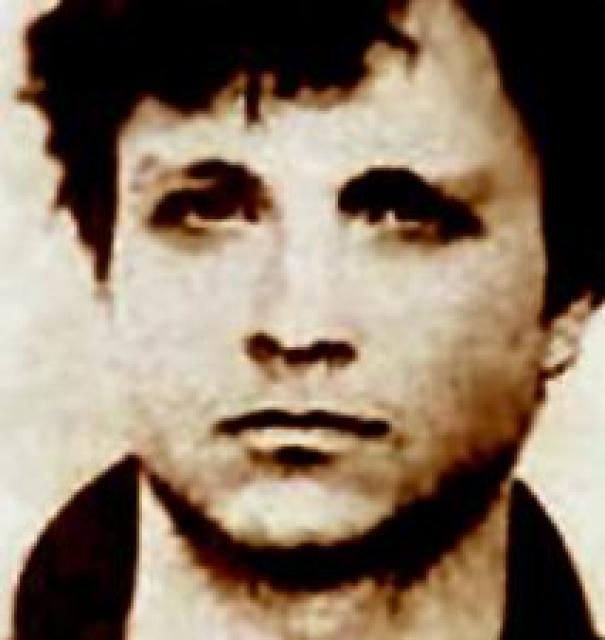
Roberto Succo
 Italy
- Early Crime and Psychiatric Confinement
- A Fugitive Across Borders
- Arrest and Death
- A Troubled Public Legacy
Roberto Succo was an Italian criminal whose violent escape from psychiatric custody in the 1980s triggered an international search across France, Switzerland and Italy. His case became infamous not only for the killings and attacks attributed to him, but also for the difficult questions it raised about psychiatric responsibility, cross-border police work and the limits of what investigators could prove before his death.
Early Crime and Psychiatric Confinement
Born in Mestre, Italy, on 3 April 1962, Succo was 19 when he killed his parents, Maria and Nazario, in 1981. He was placed in a judicial psychiatric hospital in Reggio Emilia after experts found him not criminally responsible. In 1986, while permitted to leave the facility during the day to attend classes, he escaped and disappeared across the border into France.
A Fugitive Across Borders
For almost two years, Succo moved through France and Switzerland, using assumed names and avoiding a settled identity. Police in several regions investigated a series of violent crimes, including assaults, kidnappings and murders. The cases were difficult to connect at first, in part because witnesses knew him by different names and authorities were working across national jurisdictions.
Investigators linked him to the 1987 killing of French police officer André Castillo in Tresserve and to the 1988 killing of police inspector Michel Morandin in Toulon. Other deaths and disappearances were also attributed to him, including the disappearance of France Vu-Dinh and the killing of doctor Michel Astoul. Because Succo died before a full trial on the French cases, details of his responsibility for individual crimes were not tested in court in the same way as a completed prosecution would have allowed.
Arrest and Death
A witness’s description helped French authorities identify Succo, and Italian police arrested him near Treviso on 28 February 1988. His detention did not end the drama of the case: within days, he escaped onto the prison roof and drew public attention during a prolonged standoff before falling and injuring himself.
In May, a new psychiatric assessment again found him not criminally responsible, complicating plans for prosecution and extradition. On 23 May 1988, while held in Vicenza prison, Succo died by suicide. His death closed the possibility of a full trial that might have clarified the full scope of the crimes attributed to him.
A Troubled Public Legacy
The case entered European culture as well as crime reporting. French playwright Bernard-Marie Koltès wrote Roberto Zucco, a play inspired by the case, which premiered after Succo’s death. The work transformed a real criminal story into theatre, but its stylized treatment also became controversial, especially in communities affected by the crimes.
Succo’s notoriety has often been amplified by dramatic nicknames and retellings. The documented record is more sobering: a young man who killed his parents, escaped psychiatric custody, became the focus of a multi-country investigation, and died before the allegations against him could all be examined in court.


