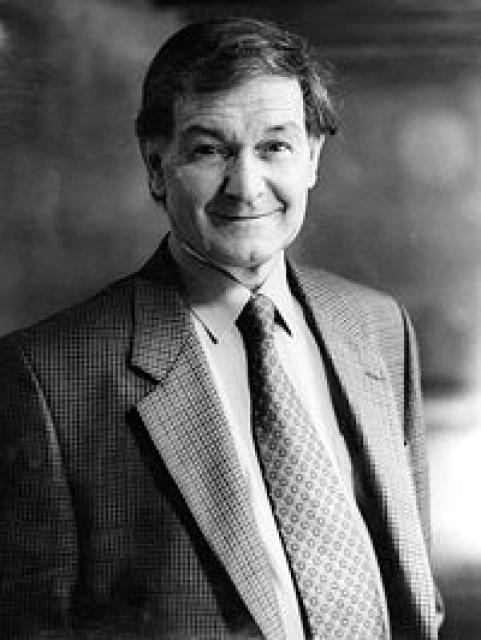
Roger Penrose
 Great Britain
- Roger Penrose - A Modern Renaissance Scientist
- Career and Achievements
- Scientific Contributions
- Publications
- Legacy
Roger Penrose - A Modern Renaissance Scientist
Roger Penrose, born on August 8, 1931, is an eminent scientist who has made significant contributions in various fields such as mathematics, general relativity, and quantum theory. He is also known as the author of the theory of twistors.
Career and Achievements
Penrose currently holds the position of the head of the Mathematics Department at the University of Oxford. He is also an honorary professor at several international universities and academies. Additionally, he is a member of the Royal Society of London.
Throughout his illustrious career, Penrose has received numerous accolades for his groundbreaking work. Some of his notable awards include the Wolf Prize (alongside Stephen Hawking), the Dirac Medal, the Albert Einstein Award, and the Royal Society Medal. In recognition of his outstanding contributions to science, he was knighted by Queen Elizabeth II in 1994.
Scientific Contributions
As a student in 1955, Penrose reinvented the concept of pseudo-inversion, also known as the Moore-Penrose inverse. In 1958, he obtained his Ph.D. degree in Cambridge, defending a dissertation on the fundamental methods of algebraic geometry.
In 1965, Penrose demonstrated that singularities similar to those existing in black holes can be formed during the gravitational collapse of dying massive stars. Two years later, he developed the theory of twistors, which maps geometric objects in Minkowski space onto a four-dimensional complex space.
In 1969, Penrose proposed the "cosmic censorship" hypothesis, which suggests that the nature of the universe prevents the observation of unpredictability in forming singularities, such as those found in black holes. This hypothesis is now known as the weak censorship hypothesis. In 1979, he further advanced the concept with the strong censorship hypothesis.
Penrose gained widespread recognition in 1974 as the inventor of Penrose tiling, a mathematical concept that allows for the tiling of an infinite plane with just two simple shapes without repetition. In 1984, similar structures were discovered in the arrangement of atoms in quasicrystals.
One of Penrose's most significant scientific contributions is the invention of spin networks in 1971. These networks have been extensively used to describe the geometry of space-time in loop quantum gravity.
Publications
In 2004, Penrose published "The Road to Reality," a comprehensive work that presents his perspectives on the laws of the universe. This 1099-page book contains extensive commentary on the principles of physics.
Penrose's other notable publications include "Shadows of the Mind: A Search for the Missing Science of Consciousness," "The Emperor's New Mind: Concerning Computers, Minds, and The Laws of Physics," and "The Large, the Small, and the Human Mind." These books discuss topics ranging from consciousness and artificial intelligence to quantum mechanics and astrophysics.
Legacy
Roger Penrose's contributions have significantly influenced various scientific disciplines, and his work continues to inspire researchers worldwide. His groundbreaking ideas and theories have expanded our understanding of the universe and its fundamental principles.




