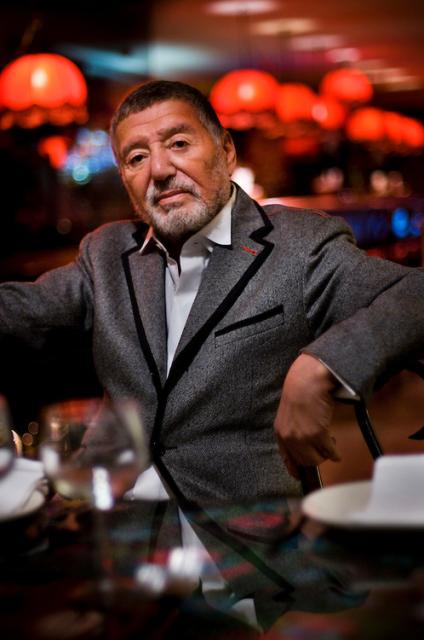
Roman Kaplan
 USA
USABiography of Roman Kaplan
Roman Arkadievich Kaplan is a literary critic, art historian, translator, and restaurateur. He was born in 1937 in Leningrad, into a family of musicians. His mother was from Rostov-on-Don, and his father came to Leningrad from a small town near Kiev. Roman has a twin brother named Anatoly, who later became a geologist.
During the Great Patriotic War, Roman and his family remained in Leningrad and endured the blockade. As a young child, he experienced harsh winters and severe hunger. They burned their books and furniture to keep warm, and even as a successful adult, Roman finds it difficult to speak about those times. It is a miracle that all three of them survived. When the blockade was lifted, Roman's mother took him and his brother to Vyshny Volochyok in the Tver Oblast, where they spent several months recovering.
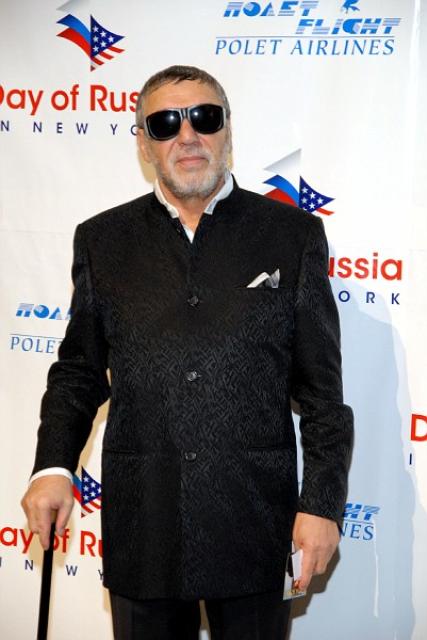
Roman has very few memories of his school years, classmates, or teachers, despite his excellent academic performance in the first eight years. He had a particular passion for humanities subjects, while mathematics remained a challenge for him. He found books more interesting than classroom lessons. His brother helped him by letting him copy his work during the last two years of school. Roman developed a deep love for poetry at an early age and began reading new poems every day as soon as he learned to read. Another lifelong interest of his was foreign languages. He was driven to learn languages by his fascination with poetry. As he read foreign poets, he wondered how their works sounded in the original language. He would write down unfamiliar words, consult dictionaries, and study grammar. It is no wonder that after finishing school, Roman Kaplan enrolled in the Leningrad Institute of Foreign Languages and simultaneously studied art history at the Academy of Arts. He then worked as a tour guide at the Hermitage Museum.
After completing his postgraduate studies at the Moscow Institute of Foreign Languages, Roman Kaplan became a teacher there and mastered the profession of simultaneous interpretation. He is fluent in English, German, and French, has good knowledge of Polish and Hebrew, and continues to study Latin.
In 1972, Roman, along with his brother and parents, emigrated to Israel due to the increasing persecution of Jews in the Soviet Union. He lived there for several years before eventually moving to the United States, albeit with great difficulty. Around the same time, a group of his friends and acquaintances, including his close friend Joseph Brodsky, a poet and essayist who would become a Nobel laureate, also left the USSR. Life in Israel was challenging, especially in terms of finding work. Roman found himself in a tiny provincial town where his command of English and Russian, as well as his dissertation on American literature, were of no use. It was incredibly difficult to leave Israel at that time, but after his short story was published in the Russian-language Israeli magazine "Vremya i My," Roman was finally able to leave the country and make his way to the United States. In New York, he had to start from scratch.
Roman first worked as a doorman, given his two higher education degrees, and then found a job at an art gallery. At home, they frequently hosted guests, and one day, Roman's wife, Lara, who spent hours washing piles of dishes, suggested that he open a restaurant if he enjoyed inviting guests so much. And so he did. In 1986, Roman, along with Brodsky and Mikhail Baryshnikov, opened the "Russian Samovar" restaurant in New York City.