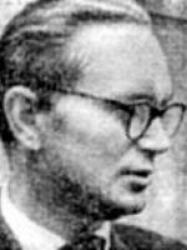
Ron Hubbard
Writer and philosopher, creator of Dianetics and Scientology
Date of Birth: 13.03.1911
Country:  USA
USA
USABiography of L. Ron Hubbard
Early Life and Education
L. Ron Hubbard was born on March 13, 1911, in Tilden, Nebraska, in the United States. He grew up on his family's ranch in Montana, where he spent his childhood. At the age of 12, he learned about human nature from Captain Joseph Thompson, a medical officer in the US Navy who had studied psychoanalysis with Sigmund Freud in Vienna, Austria. Although Hubbard later rejected Freud's teachings, he concluded that "something can be done about the mind."
Exploration and Writing Career
In his early twenties, Hubbard embarked on a journey through various countries in the East, including China, Tibet, India, and Japan, where he gathered information about human existence. He returned to the United States and began his professional writing career in the 1930s and 1940s, becoming a popular author in multiple genres, including adventure, fantasy, science fiction, and westerns. He also wrote screenplays for Columbia Pictures.
Scientific Studies and Military Service
During the early 1930s, Hubbard pursued higher education in engineering, mathematics, and nuclear physics at George Washington University. He conducted experiments on human memory storage and the nature of aesthetics. In the 1940s, he served in the US Navy during World War II and commanded anti-submarine ships in the Atlantic and Pacific Oceans.
Development of Dianetics and Scientology
In 1950, Hubbard published the book "Dianetics: The Modern Science of Mental Health," which became a bestseller and sparked a widespread public movement. He further developed his theories and techniques, leading to the establishment of local Scientology churches in the United States, Denmark, Canada, New Zealand, France, South Africa, and other countries.
Contributions and Controversies
Throughout his lifetime, Hubbard made significant contributions to the field of self-help and personal development. He developed programs to address issues such as drug addiction, criminality, illiteracy, and moral decline. However, his teachings faced criticism from the scientific community and allegations of fraud and abuse.
Later Years and Legacy
In the later years of his life, Hubbard continued to explore spiritual aspects of human nature and further refine the technology of Scientology. He passed away on January 24, 1986, at his ranch in California. Despite the controversies surrounding his work, Hubbard's influence continues to be felt through the numerous Scientology organizations and the extensive body of his writings.