
Ronnie Wood
 Great Britain
Biography of Ronnie Wood
Ronnie Wood is a British rock musician who became famous after joining the London-based group "The Birds" in 1964. The band played rhythm and blues and is considered a precursor to hard rock. Although the group never recorded a full album, they released a few singles, with Wood writing half of them.

Ronnie Wood was born on June 1, 1947, in Middlesex, England. His full name is Ronald David Wood. His older brother, Arthur, was also interested in music and formed the group "The Artwoods" in the 1960s, which played R&B music. At that time, Ronnie preferred drawing and went to London to enroll in the Ealing College of Art. After completing college, he worked in his field for two weeks before music took over. It is worth noting that Wood did not give up drawing and still exhibits his paintings, mainly portraits of musicians he has worked with.
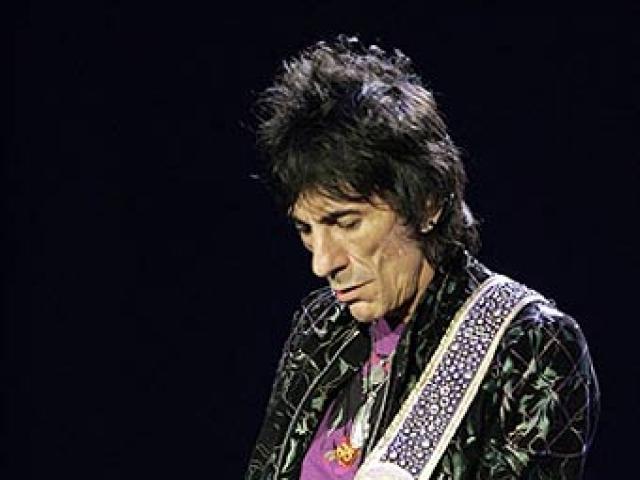
After joining "The Birds" in 1964, Wood performed with the band for a while before joining the group "Creation." In 1967, Ronnie Wood became the bass guitarist for "The Jeff Beck Group," which became a turning point in his musical career. Wood participated in several tours and contributed to the recording of two studio albums, "Truth" and "Beck-Ola," which are now considered rock music classics. In 1969, "The Jeff Beck Group" disbanded, and Wood, along with the group's vocalist Rod Stewart, joined "Small Faces," which was renamed "Faces." The band successfully performed concerts and became prominent in British rhythm and blues. In 1970, they released the album "First Step," followed by two more albums in 1971, "Longplayer" and "A Nod's as Good as a Wink to a Blind Horse." Wood's last album with "Faces" was recorded in 1974, after which the group disbanded.
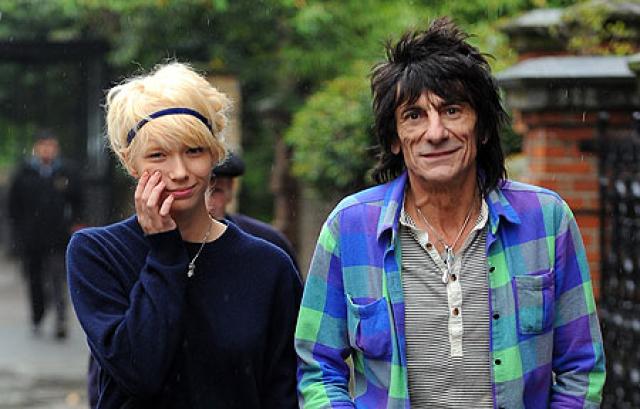
Parallel to his time with "Faces," Ronnie Wood assisted Rod Stewart in recording his solo albums, including "An Old Raincoat Won't Ever Let You Down" and "Gasoline Alley" in 1970, "Never a Dull Moment" in 1972, and "Smiler" in 1974. After the dissolution of "Faces," Wood pursued a solo career and released his first solo album, "I've Got My Own Album to Do," in 1974. A year later, he released his next album, "Now Look." In 1976, together with another former member of "Faces," Ronnie Lane, Wood wrote the album "Mahoney's Last Stand."
During this time, the renowned band "Rolling Stones" was searching for a guitarist to replace Mick Taylor. In 1973, Wood collaborated with Mick Jagger on the song "It's Only Rock 'n Roll (But I Like It)," and in 1975, he was invited to join the Rolling Stones on a tour of America. In 1976, Ronnie became a full member of the "Rolling Stones." His playing style, where both he and Keith Richards could play solo and rhythm parts, became a trademark of the band. The presence of Ronnie Wood, always calm and with a cigarette in his mouth, became essential to the Rolling Stones' image. Ronnie Wood continues to release solo albums and also assists his colleagues, such as Eric Clapton, Bob Dylan, David Bowie, and other famous musicians, with their recordings.


