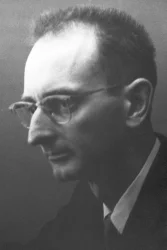
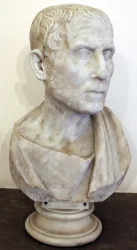
Ruđer Josip Bošković
Ruđer Josip Bošković was a mathematician, astronomer, physicist, Jesuit priest and diplomat whose ideas ranged across the sciences and philosophy. A native of the Republic of Ragusa, he spent much of his career teaching and working in Italy and later France. His best-known work proposed that the forces between the basic points of matter varied with distance, offering an ambitious unifying picture of nature.
Early life and education
Bošković was born in Dubrovnik, then the independent Republic of Ragusa, on May 18, 1711. He entered the Society of Jesus as a young man and went to Rome, where he studied at the Collegio Romano. He joined the Jesuit order in 1725 and was ordained a priest in 1744.
His intellectual interests were unusually broad. Alongside mathematics and astronomy, he pursued mechanics, optics, geodesy and natural philosophy. He became a professor at the Collegio Romano and published research on topics including the shape of Earth, eclipses and the movement of celestial bodies.
A theory of matter
Bošković’s most influential book, “A Theory of Natural Philosophy,” appeared in 1758. It offered a unified account of matter built around indivisible points that interacted through a single force. In his model, that force could be repulsive at very short distances and attractive at greater ones, changing with separation according to a continuous law.
This picture differed from the familiar idea of matter as tiny hard balls. Bošković’s points had no ordinary size or solid surface; their interactions were what gave matter its properties. His proposal was a philosophical and mathematical framework rather than a modern atomic theory, but later readers found it strikingly suggestive. It attracted attention from scientists and philosophers, including figures interested in how a force-based account might explain the structure of matter.
Astronomy, engineering and travel
Bošković’s scientific work was practical as well as theoretical. In 1750–1752, he took part in a survey of the Papal States to measure a meridian arc and improve maps. He also advised on engineering problems and investigated the stability of buildings, including damage to St. Peter’s Basilica in Rome.
In 1764, he helped establish the Brera Observatory in Milan and later held its chair of astronomy. His work on optics included efforts to improve telescope lenses. He was also an energetic traveler and diplomat, carrying out missions for Ragusa and the papacy and exchanging ideas with scholars across Europe.
The suppression of the Jesuit order in 1773 disrupted his position in Italy. Bošković moved to Paris the following year, where he became a French citizen and directed optical work for the French Navy. He continued to write and pursue scientific projects, though professional disputes and declining health made his later years difficult.
Legacy
Bošković returned to Italy and died in Milan on February 13, 1787. His intellectual range makes him difficult to fit into a single modern specialty: he moved between mathematical theory, observation, engineering, philosophy and public service.
His account of matter did not anticipate contemporary physics in a direct or complete way, and it should not be confused with later atomic models. Its lasting importance lies in the bold attempt to explain the physical world through a coherent law of interaction, and in the questions it raised about what matter is and how forces shape it.