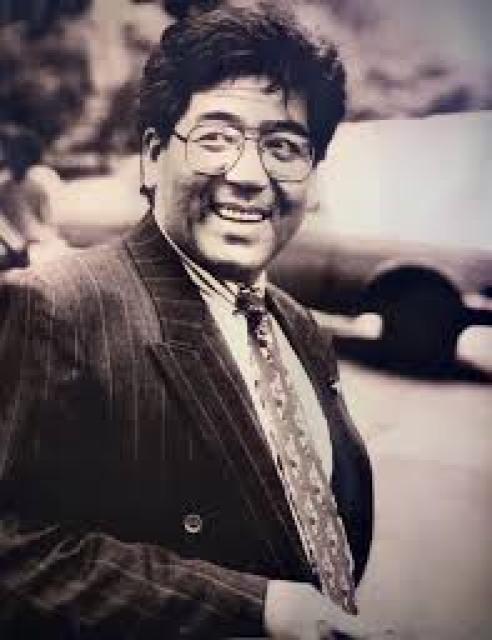
Satybaldy Jeenbekov
 Kyrgyzstan
- Early Life and Education
- Career in Education and Transition to Broadcasting
- Recognition as a Master Announcer
- Leadership at State Television
- Transforming the Media Landscape
- Political Career and Parliament
- Legacy and Recognition
- Family
Early Life and Education
Satybaldy Zheenbekov was born on June 13, 1952, in the village of Bagysh in the Suzak district of the Jalal-Abad region, Kyrgyzstan. His father was a veteran of the Great Patriotic War, while his mother was awarded the title of "Heroine Mother." After completing his secondary education, Zheenbekov entered the Michurinsk State Pedagogical Institute in Russia in 1970, where he earned a diploma as a teacher of Russian language and literature.
Career in Education and Transition to Broadcasting
In 1975, Zheenbekov returned to his hometown and began his career as a teacher of Russian language and literature at the A. S. Pushkin school. In 1976, he became the school's principal, a position he held until 1979. He then became an instructor at the Suzak vocational school (PTU No. 36) before serving as its trade union chairman from 1980 to 1982.
Despite his promising career in education, Zheenbekov's remarkable voice and elocution led him to pursue a career in broadcasting. In 1982, he passed a competitive exam and joined the staff of the Kyrgyz State Radio and Television, moving to the capital city of Bishkek. He initially worked as a third-category announcer, later rising to the highest rank.
Recognition as a Master Announcer
Zheenbekov's exceptional voice and announcing skills quickly gained recognition. He became the trusted voice for major events, including national holidays and Victory Day celebrations. In 1984, he received an invitation to become an announcer for the state television channel of the Uzbek SSR in Tashkent, with the promise of an apartment and a higher salary. Despite his lack of permanent housing, Zheenbekov declined the offer at the request of the First Secretary of the Communist Party of Kyrgyzstan, Turdakun Usubaliev, who recognized his unique talent.
Leadership at State Television
Zheenbekov played a significant role in Kyrgyzstan's state television and radio broadcasting. He created and hosted two popular programs, "Evening Conversation" and "Before and After Midnight." From 1989 to 1990, he served as chairman of the State Television and Radio Committee of the Kyrgyz SSR.
In 1991, during the attempted coup against the Soviet Union, Zheenbekov joined the Democratic Movement of Kyrgyzstan. He used his position within the State Television and Radio Committee to broadcast the Democratic Movement's messages in support of democracy, defying the Communist Party's attempts to suppress them.
Transforming the Media Landscape
After Kyrgyzstan gained independence in 1991, Zheenbekov became the president of the state-owned Kyrgyz Television and Radio Corporation (KTRK). He implemented sweeping reforms, establishing an independent television and radio company called "Pyramid." He also introduced the principles of freedom of speech and expression, allowing the broadcasting of Radio Azattyk, BBC, and Voice of America.
Under Zheenbekov's leadership, KTRK became a progressive and influential media outlet. However, his reforms clashed with the increasingly authoritarian regime of President Askar Akayev. Accused of disloyalty and sidelined from his position, Zheenbekov became a vocal critic of Akayev's government.
Political Career and Parliament
In 1995, Zheenbekov was elected to the Kyrgyz Parliament as a member of the Erk party, representing the Suzak-Makmal constituency. His path to parliament was met with obstacles, including the postponement of elections and attempts to invalidate the results. Despite widespread irregularities, Zheenbekov's supporters remained loyal, and he became a prominent opposition voice in the Zhogorku Kenesh.
Zheenbekov served as chairman of the Committee on International and Interparliamentary Relations, as well as deputy chairman of the parliamentary commission investigating organized crime and corruption. He was instrumental in exposing corrupt and shadowy figures within the establishment. He rejected offers of government positions, stating that he was accountable only to his constituents.
Legacy and Recognition
Satybaldy Zheenbekov's untimely passing in May 1996 at the age of 44 shocked the nation. He is remembered as a courageous advocate for freedom of speech and a symbol of integrity in public life.
In recognition of his contributions, Zheenbekov has been awarded the "Manas 1000" jubilee medal and the Certificate of Merit of the Kyrgyz Republic. Numerous institutions and events have been named in his honor, including schools, sports competitions, and an annual journalism award.
Family
Satybaldy Zheenbekov was married to Fatima Aripova and had three sons: Samat, Azat, and Kairat. His legacy continues to inspire future generations of Kyrgyz citizens.