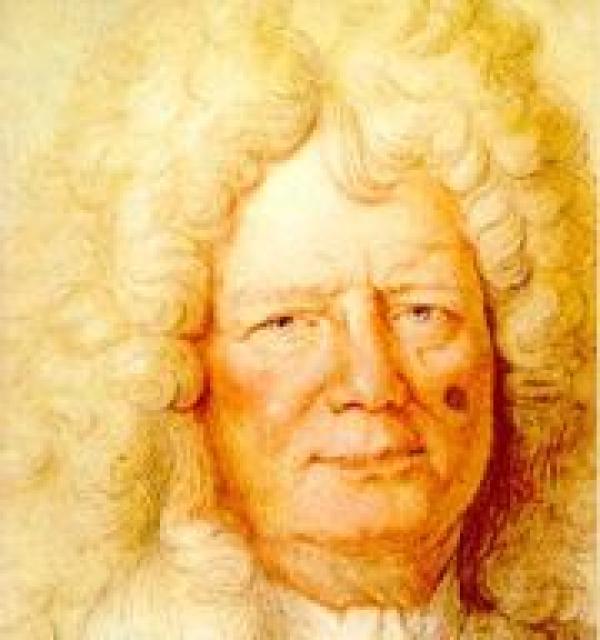
Sebastien Le Prestre de Vauban
 France
- Sébastien Le Prestre de Vauban, Marshal of France
- Early Career and Transition to French Army
- Innovative Sieges and Fortification Techniques
- Chief Engineer of France and Financial Advocacy
- Legacy and Influence
- Literary Works and Post-Mortem Publications
Sébastien Le Prestre de Vauban, Marshal of France
Military Engineer and Fortification MasterSébastien Le Prestre de Vauban was an exceptional military engineer and a renowned figure in the history of fortification. Serving as Marshal of France, he dedicated his life to besieging enemy fortresses and constructing French fortifications. He rebuilt 33 fortresses, improved nearly 300, participated in 53 sieges, and fought in 104 battles and skirmishes.
Early Career and Transition to French Army
Vauban began his military career under the command of Prince Louis-Joseph de Condé, an ally of Spain against France. Captured in 1653, he switched allegiance to the French army. In the 1660s, he focused on fortress construction, leading to the capitulation of several Belgian fortresses in 1667.
Innovative Sieges and Fortification Techniques
Vauban revolutionized siege warfare with his innovative methods of attack. He introduced the concept of slow and methodical approach with minimal casualties, famously stating, "More sweat, less blood." He suppressed fortress artillery before advancing infantry using concealed trenches called "parallels."
In fortification design, Vauban's ideas were practical rather than radical. He adapted existing bastion systems to suit specific terrain and circumstances. His successors distilled his approaches into three systems: the simple system, the first and second reinforced systems (Landau and Neuf-Brisach systems, named after fortresses he built).
Chief Engineer of France and Financial Advocacy
In 1677, Vauban became the Chief Engineer of France. He developed a comprehensive fortification system along the borders, creating a ring of defensive fortresses around the kingdom.
Beyond his military prowess, Vauban expressed concerns about the French financial system. His book, "La dîme royale," criticized the existing taxation system and proposed a single royal tithe. This publication sparked controversy and earned him the disapproval of King Louis XIV.
Legacy and Influence
Vauban's innovative engineering techniques, particularly his "step-by-step" approach to sieges, remained influential until the 20th century. He became known as "the Father of Gradual Attack," just as Érard de Bar-le-Duc was known as "the Father of Fortification."
His economic ideas also made him a forerunner of the physiocrats. His analysis of poverty and his proposal for comprehensive tax reform left a lasting impact on economic thought.
Literary Works and Post-Mortem Publications
In addition to his military contributions, Vauban authored several works that were published posthumously:
- "Oeuvres militaires" (1793)
- "Trait de l'attaque des places" (1829)
- "Traité de la défense" (1829)
- "Mémoires inédits" (1841)
- "Mémoires militaires" (1847)
- "Oisiveté de V." (1843-46)
Vauban's enduring legacy as a military engineer, fortification master, and economic thinker continues to inspire and inform scholarly research and fortification practice to this day.


