Serafim Shashkov
 Russia
- Early Life and Education
- Seminary Education and Literary Beginnings
- Kazan Academy and Intellectual Development
- St. Petersburg and Journalistic Work
- Exile and Continued Writing
- Later Life and Literary Legacy
- Historical Compilations and Social Commentary
- Posthumous Recognition
Early Life and Education
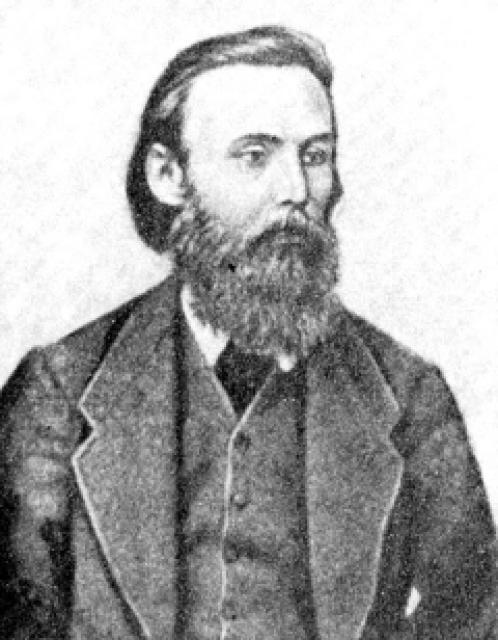
Seraphim Serafimovich Shashkov (1841-1882) was born and raised in Irkutsk, amidst the hardships of an impoverished clergy family. His father, a priest, was a man of education who grappled with alcoholism. Initially homeschooled, Shashkov later attended the bursa, a religious preparatory school.
Seminary Education and Literary Beginnings
After the bursa, Shashkov enrolled in the seminary, where he found inspiration in the teachings of dedicated professors. While excelling academically, he struggled to adhere to "proper conduct." During his seminary years, Shashkov delved into writing, publishing articles on the Buryat people in the "Irkutsk Gubernskiye Vedomosti" in 1858, drawing the ire of authorities.
Kazan Academy and Intellectual Development
In 1860, Shashkov was dispatched to the Kazan Spiritual Academy. Despite the academy's embrace of monastic discipline and scholasticism, Shashkov encountered influential historians like G. Z. Eliseev and A. P. Shchapov. There, he developed his theories on the dependence of history on environmental factors and became immersed in economics.
St. Petersburg and Journalistic Work
Leaving the academy after a year, Shashkov moved to St. Petersburg on Eliseev's suggestion to attend university lectures and contribute to the magazine "Mirskoy Tolk." While financially struggling, he collaborated with several periodicals, including "Vek," "Iskra," and "Sovremennoye Slovo."
Exile and Continued Writing
In 1863, Shashkov returned to Siberia. In Krasnoyarsk, he established a private school that was later closed down. From 1864-1865, he delivered public lectures on Siberian history in Krasnoyarsk and Tomsk. Upon his return to European Russia, he was exiled to Shenkursk (1868-1873), where he contracted an illness that would eventually end his life.
Later Life and Literary Legacy
Restricted from residing in major cities, Shashkov moved frequently, including to Bobrov, Voronezh, and Novgorod, where he eventually succumbed to his illness. Throughout his life, Shashkov was a prolific writer, contributing to numerous publications and likely authoring over a thousand articles.
Historical Compilations and Social Commentary
Shashkov was a skilled compiler, specializing in drawing parallels between historical events and contemporary Russian society. His major works focused on Russian history, including a comprehensive study on the position of women. His writings shed light on the darker aspects of contemporary life and were widely read by self-educating youth.
Posthumous Recognition
Shashkov's collection of works was published in two volumes in 1898, ensuring his literary legacy. His original research and insightful commentary continue to be relevant, as evidenced by the republication of his works in recent times.