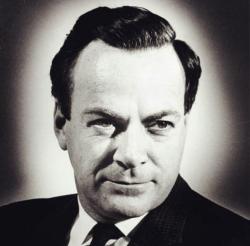
Sesil Pauell
 Great Britain
- Early Life and Education
- Assistant Studentship and Doctoral Work
- Career at the University of Bristol
- Nuclear Emulsion Experiments
- Discovery of the Pion
- Pi-Meson Properties and Nobel Prize
- Later Career and Legacy
Early Life and Education
Cecil Frank Powell was born on December 5, 1903, in Tonbridge, Kent, England. His father, Frank Powell, was a gunsmith, and his mother, Elizabeth Caroline (née Bisacre) Powell, was a schoolteacher's daughter. A legal action over an accidental shooting ruined his father, and the family fell into financial hardship.
Powell attended the local elementary school until, at age eleven, he won a scholarship to Judd School in Tonbridge, where a teacher ignited his interest in physics. Excelling in all subjects, he earned a scholarship to Sidney Sussex College, Cambridge, from which he graduated in 1925 with first-class honors in physics.
Assistant Studentship and Doctoral Work
Despite being offered a teaching position, Powell opted to remain in Cambridge as an assistant student under C.T.R. Wilson and Ernest Rutherford. In his first independent research, Powell attempted to improve Wilson's 1911 cloud chamber, hoping to detect higher-energy nuclear particles. While unsuccessful, his experiments deepened his understanding of condensation processes in the Wilson chamber. For this work, he received his doctorate in 1927.
Career at the University of Bristol
In 1928, Powell became a research assistant to A.M. Tyndall at the University of Bristol. He started lecturing in physics in 1931, eventually serving as Senior Lecturer in Physics (1946), Professor of Physics (1948), and Director of the H.H. Wills Physics Laboratory (1964). He also held the post of Vice-Chancellor of the University from 1964 to 1967.
At Bristol, Powell initially researched ionic motion in gases. Recognizing the future of nuclear physics research, Tyndall asked Powell to lead the construction of a cyclotron, a project he managed until 1939. In 1936, he briefly interrupted his work to join a British scientific expedition to Montserrat in the West Indies as a seismologist, as the government feared an impending volcanic eruption (which fortunately did not occur).
Nuclear Emulsion Experiments
Soon after the cyclotron's completion, Powell became intrigued by the potential of photographic plates for detecting tracks of electrically charged particles. Although this method had been used previously, scientists had abandoned it, believing that photographic emulsions did not produce accurate or reliable results. Most subsequent research relied on the Wilson cloud chamber.
Powell, however, became convinced that nuclear emulsion could provide a precise tool for elementary particle physics, as it could record the track of any charged particle passing through it, whereas in a cloud chamber, tracks could only be observed for a brief period. In the late 1930s, he persuaded photographic manufacturers to develop new, more sensitive emulsions specifically for physics research and purchased high-quality German microscopes for studying the plates.
Discovery of the Pion
Despite his efforts, Powell's initial research results were disappointing. With the outbreak of World War II (1939), Powell and his colleagues contributed to the British atomic energy project, making neutron energy measurements. After the war, resuming his particle detection work, Powell successfully convinced photo materials companies Ilford and Kodak to produce special emulsions and develop new film development techniques for tracking nuclear particles.
In 1946, the Ilford Laboratory improved their emulsion, enabling clearer track visualization and more reliable measurements. With the new emulsion, Powell studied cosmic rays in the Pyrenees Mountains, choosing a high altitude (about 3,000 meters) because the Earth's atmosphere prevents many cosmic ray particles from reaching the planet. In 1947, he and his colleagues discovered a new charged particle in cosmic rays, the pi-meson, or pion.
Pi-Meson Properties and Nobel Prize
The pion's mass was 273 times greater than the electron's, about one-seventh the mass of a proton. It was a short-lived particle that decayed into a muon (an electron-like particle) and a neutrino (a particle with no mass or electric charge). The pion was primarily responsible for the interaction between protons and neutrons, preventing the atomic nucleus from breaking apart.
Predicted in 1935 by Japanese physicist Hideki Yukawa, the discovery of the pion opened doors to the detection of many other subatomic particles. Powell and his collaborators also discovered K-mesons, which were heavier than pi-mesons, lived for an even shorter time, and also played a role in the forces binding the particles in an atomic nucleus together.
Extending his search for cosmic particles, Powell launched photographic plates to higher altitudes, first using balloons and later rockets. In 1952, he moved his balloon launches to the Mediterranean Sea, where favorable weather conditions allowed longer flight times. Powell collaborated with scientists from many European countries, recovering the balloons, retrieving the plates, and analyzing them for tracks of new particles.
For his "development of the photographic method of studying nuclear processes and his discoveries regarding mesons made with this method," Powell was awarded the 1950 Nobel Prize in Physics. In his presentation speech, A. Lind, a member of the Royal Swedish Academy of Sciences, remarked, "Powell deserves special thanks for demonstrating that discoveries of fundamental importance can be made with the simplest apparatus (in this case, nuclear emulsions specially developed under his general direction) and microscopes."
Later Career and Legacy
Following his Nobel Prize, Powell continued his cosmic ray research, expanding into international projects studying this field. He also pursued accelerator-based research. With a deep sense of social responsibility, he became increasingly involved in scientific organizations addressing nuclear weapons non-proliferation.
As President of the Association of Scientific Workers (1952-1954), he urged the British government to take steps towards banning nuclear weapons. In 1955, Powell convinced eight other eminent scientists, including Albert Einstein, to co-sign Bertrand Russell's appeal warning the world of the horrors of nuclear warfare and calling for a disarmament conference. Powell was also a member of the Pugwash Movement, participating in the first Pugwash Conference in 1957.
In 1932, Powell married Isabella Therese Artner of Hamburg, introduced to him by Max Delbrück. They had two daughters. Powell died suddenly while on vacation in Milan, Italy, on August 9, 1969.
Powell had numerous honors and medals bestowed upon him, including the Hughes Medal (1949) and Royal Medal (1961) from the Royal Society of London, and the Lomonosov Medal from the Academy of Sciences of the USSR (1967). He was a Fellow of the Royal Society of London and a foreign member of numerous scientific societies worldwide. From 1961 to 1963, he chaired the Scientific Policy Committee of CERN (European Organization for Nuclear Research), and the Universities of Dublin, Bordeaux, and Warsaw awarded him honorary science doctorates.