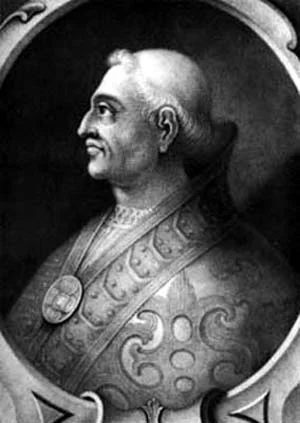
Severinus
- Election during an imperial crisis
- The long road to consecration
- A brief pontificate in a divided church
- Legacy
Severinus was pope for only a few months in 640, but the struggle surrounding his election exposed the tensions between Rome and the Byzantine Empire. His consecration was delayed for more than a year while imperial authorities pressed him to accept a theological statement on the nature of Christ. The dispute turned a papal appointment into a test of both church authority and the emperor’s power over Rome.
Election during an imperial crisis
Little is known about Severinus before he became pope. He was a Roman and the son of a man named Abienus or Labienus, according to differing accounts. He was elected to succeed Pope Honorius I in October 638, at a moment when debate over Christ’s nature was dividing Christian leaders across the empire.
The controversy centered on Monothelitism, the teaching that Christ had one will despite possessing both divine and human natures. In 638, Emperor Heraclius issued the *Ecthesis*, a statement of faith that supported this position. It was intended to settle the dispute, but instead intensified disagreement between Constantinople and church leaders who insisted that Christ possessed both a divine and a human will.
The long road to consecration
Severinus’s election was not immediately confirmed by the emperor. Imperial officials expected the new pope to accept the *Ecthesis*, but he refused to sign it. Negotiations continued in Constantinople, where papal representatives sought recognition without endorsing the disputed formula. The episode reflected the Byzantine government’s expectation that imperial authority would shape the appointment of Rome’s bishop.
While the negotiations dragged on, violence erupted in Rome. According to the *Liber Pontificalis*, the Byzantine exarch Isaac of Ravenna and his officials took control of the Lateran palace and seized church wealth. The exact sequence and motives are reported through church sources hostile to the exarch, but the episode demonstrates how political and military pressure accompanied the theological dispute.
Imperial confirmation finally arrived, and Severinus was consecrated on 28 May 640, about twenty months after his election. He did not hold the papacy long enough to leave a substantial written or administrative record. His pontificate ended with his death on 2 August of the same year.
A brief pontificate in a divided church
Severinus’s refusal to sign the *Ecthesis* aligned him with opponents of Monothelitism, although the shortness of his reign limited his opportunity to shape the wider debate. The question would remain unresolved for decades. Later popes and councils continued to contest the relationship between Christ’s human and divine natures, and the doctrine of one will was eventually rejected by the church.
His papacy also illustrates the complicated status of Rome in the seventh century. The city was part of the Byzantine Empire, whose emperor claimed authority over its territories, while the pope increasingly acted as a religious leader with independent responsibilities. Military officials, imperial policy, and local church institutions all influenced the succession.
Legacy
Severinus left few personal details to history, and his brief tenure means that his significance lies chiefly in the circumstances of his election. The delay, the refusal to endorse the *Ecthesis*, and the seizure of the Lateran treasury reveal a papacy operating under intense imperial pressure.
His story is a small but telling episode in the longer struggle over church doctrine and political control in the early medieval Mediterranean. Severinus was pope for roughly two months after his formal consecration, yet the events surrounding that consecration showed that even a short pontificate could expose the fault lines of an empire.