Shisheliya Mansurova
- Cecily Mansurova: The Enigmatic Star of the Vakhtangov Theatre
- A Legacy of Iconic Roles
- - The fiery Spanish woman Doña Urraca in "Hell and Paradise"
- A Master of Craft
- Later Career and Legacy
- - Beatrice in "Much Ado About Nothing"
- Teaching and Artistic Leadership
- A Rebellious Spirit
- Personal Life
- Honors and Legacy
Cecily Mansurova: The Enigmatic Star of the Vakhtangov Theatre
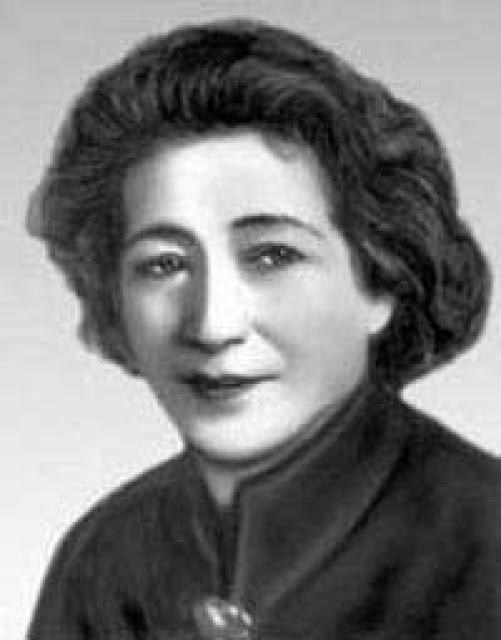
Early Life and EducationCecily Mansurova (born Olga Vellerstein) was born into an engineer's family in Moscow on March 8, 1897. After graduating from the law faculty of Kyiv University in 1919, she joined the legendary Vakhtangov Studio, where she adopted her stage name.
A Legacy of Iconic Roles
Mansurova made her indelible mark on the history of the Vakhtangov Theatre as the first actress to portray the enigmatic Princess Turandot in Vakhtangov's renowned production in 1922. Her captivating and eccentric performance set the stage for a remarkable career that included memorable portrayals of:
- The fiery Spanish woman Doña Urraca in "Hell and Paradise"
- The cunning and calculating Zoya in "Zoyka's Apartment"- The frivolous Ksenia in "The Rift"
- The strong-willed and tempestuous Shurka in "Yegor Bulychev and Others"
A Master of Craft
As a devoted student of Vakhtangov, Mansurova embodied his aesthetic principles and dedicated herself to her craft. Her performances were characterized by impeccable stage presence, expressive physicality, and a refined sense of style.
Later Career and Legacy
In her later years, Mansurova's artistry continued to shine in roles such as:
- Beatrice in "Much Ado About Nothing"
- Roxane in "Cyrano de Bergerac"- Filumena Marturano in "Filumena"
Throughout her career, Mansurova collaborated closely with Ruben Simonov, their partnership becoming an enduring symbol of the Vakhtangov Theatre's legacy.
Teaching and Artistic Leadership
From 1939, Mansurova taught at the Vakhtangov Theatre School (later renamed Boris Shchukin Theatre Institute), where she became a beloved professor. During World War II, she served as artistic director of the theatre's front-line branch.
A Rebellious Spirit
Despite her legendary status, Mansurova remained an enigmatic and unconventional figure. She avoided the spotlight, preferring to focus on her art and her students. Her eccentric nature, love of mischievous behavior, and unwavering intelligence set her apart.
Personal Life
Mansurova's marriage to Nikolai Sheremetev, a descendant of the aristocratic Sheremetev family, was a testament to her rebellious spirit.
Honors and Legacy
In 1971, Mansurova was bestowed the prestigious title of People's Artist of the USSR. Her death in 1976 marked a profound loss for the theater community. She is buried in the Novodevichy Cemetery in Moscow, alongside her husband.
Cecily Mansurova's influence on Russian theater is immeasurable. Her performances and teachings continue to inspire generations of artists, embodying the spirit of exploration and the pursuit of excellence that defined the legacy of the Vakhtangov Theatre.