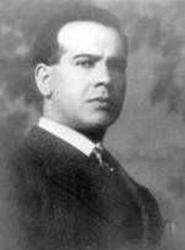
Sidor Belarsky
 USA
Sidor Belarsky was a Ukrainian-born American bass-baritone who built a career between opera, concert stages and Jewish musical traditions. Trained in the classical operatic repertory, he also became a celebrated interpreter of Yiddish folk and art songs, Hebrew songs and cantorial music. His performances and recordings helped preserve a broad repertoire for Jewish audiences in the United States and around the world.
Early Life and Musical Training
Belarsky was born in the late 19th century in the region around Odessa, then part of the Russian Empire and now in Ukraine. Sources differ on his birth year, listing either 1898 or 1900, and record his original name in variant forms including Isidor or Israel Lifshitz. He studied music in Odessa and graduated from the Leningrad State Conservatory, developing the deep bass voice that would anchor his professional life.
After his studies, he joined the Leningrad State Opera Company as a leading bass. Opera gave him a platform for his classical training, while his Jewish background and interest in traditional music would later lead him toward a second, equally important musical identity.
A New Career in the United States
Belarsky arrived in the United States in 1930, initially as a concert performer. He sang with the Los Angeles Symphony and appeared with opera companies in Chicago, San Francisco, Los Angeles and New York, as well as in South America. He also taught music, including at Brigham Young University from 1930 to 1933, the University of Utah and the Jewish Teachers Seminary–Herzliah Institute in New York.
His repertoire and teaching brought him into contact with audiences beyond the opera house. He regularly toured across North America and abroad, performing in Europe, the Middle East, South Africa and South America. In 1948, he traveled to Israel to sing in celebration of the country’s establishment, and later made the documentary film Shalom Israel.
Interpreter of Jewish Song
Belarsky became especially known for bringing classical vocal technique to Yiddish folk and art songs, Hasidic melodies, Hebrew songs and cantorial music. His carefully shaped style set him apart from both the theatrical sound of Yiddish musical theater and the more liturgical approach of synagogue cantors. He moved between these worlds, making recordings and arrangements that preserved songs from Jewish life in Europe and helped them reach new listeners.
For audiences formed by migration and memory, his concerts offered a musical connection to the “Old Country.” His work held together opera’s formal discipline and the particular emotional world of Jewish song. That range made him a distinctive presence in American Jewish music and a model for later classically trained singers who turned toward Yiddish repertoire.
Legacy
Belarsky died in New York in 1975. His legacy rests not only in his operatic career but also in his role as a collector, interpreter and teacher of Jewish music. Recordings of his performances continue to circulate, while his papers, programs and songbooks preserve evidence of a life spent carrying music across languages, traditions and continents.