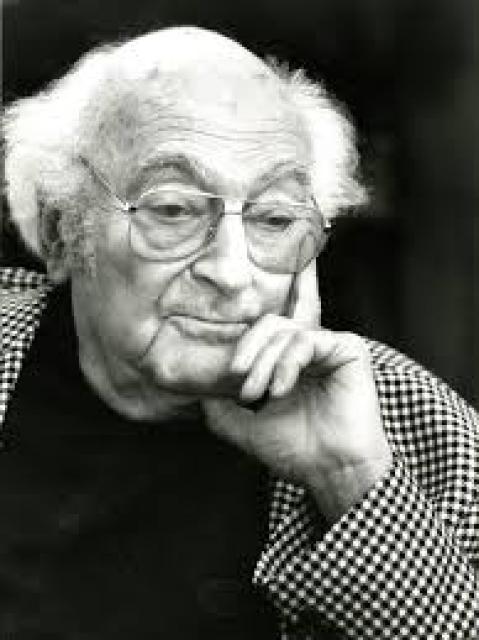
Stefan Heym
 Germany
- Early Life and Exile
- American Experience
- Military and Anti-War Activism
- Life in East Germany
- Dissidence and Reunification
- Legacy
Early Life and Exile
Stefan Heym, born into a Jewish family in Germany, was expelled from school in 1931 for his anti-war poems. He completed his education in Berlin and, after the Reichstag fire in 1933, fled to Czechoslovakia and later to the United States in 1935. His father was imprisoned as a hostage due to his son's earlier anti-Nazi writings, leading Heym to adopt the pseudonym "Stefan Heym."
American Experience
In the United States, Heym earned a doctorate from the University of Chicago, specializing in the irony of Heinrich Heine. He published his first novel, "Hostages," in 1942, which was a bestseller and depicted the heroic resistance of the Czech people against the Nazis. Heym's relatives perished in Nazi concentration camps.
Military and Anti-War Activism
During World War II, Heym served as an officer in the U.S. Army, writing propaganda leaflets and radio broadcasts. He participated in the Normandy landings in 1944 and later published the satirical novel "The Crusaders" (1948), exposing the behind-the-scenes maneuvers within the American military. He returned his military awards, including a Bronze Star, to protest the Korean War and returned to Europe via Czechoslovakia in 1952.
Life in East Germany
In East Germany, Heym initially enjoyed a privileged position as an anti-fascist émigré. However, conflicts with the socialist authorities arose after the 20th Communist Party Congress in 1956. His novel "Five Days in June," depicting worker unrest in 1953, was banned from publication. In 1969, he faced attacks from Erich Honecker, leading him to write primarily in German and publish his works in the West.
Dissidence and Reunification
In 1976, Heym signed a protest letter against the imprisonment of Wolf Biermann, and was consequently banned from publication in East Germany. He actively participated in the human rights movement and supported German reunification. After reunification, Heym opposed the discrimination against East Germans and maintained his anti-capitalist stance. He was elected to the Bundestag in 1994 and resigned in protest against constitutional changes in 1995.
Legacy
Stefan Heym passed away in 2001 in Jerusalem at a conference dedicated to Heinrich Heine. His writings explored themes of resistance, anti-fascism, and the search for justice in a tumultuous era. As a writer, journalist, and political activist, Heym left a lasting legacy both in German literature and in the struggle for freedom and human dignity.