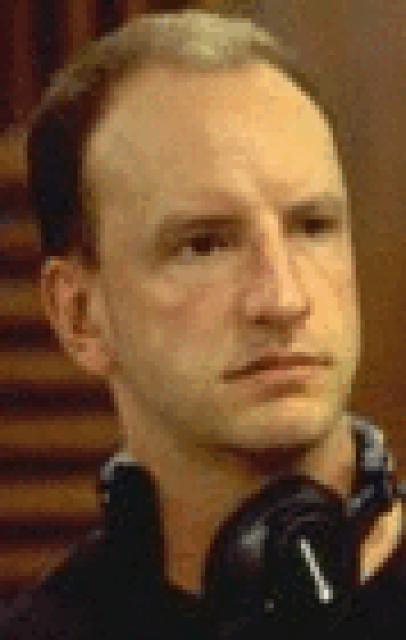
Steven Soderbergh
 USA
USA- Early Life and Inspiration
- Passion for Filmmaking and Early Work
- Breakthrough and "Sex, Lies, and Videotape"
- Creative Approach and Independence
- Critical and Commercial Triumph (2000)
- Post-2000 Career and Legacy
- Personal Life and Beliefs
Early Life and Inspiration
Steven Soderbergh was born on January 14, 1963, in Atlanta, Georgia. His paternal ancestors emigrated from Sweden. When Soderbergh was young, his father, a university professor, was transferred to Louisiana State University, and the family moved to nearby Baton Rouge. Soderbergh's childhood was surrounded by academics, professors, and students.
Passion for Filmmaking and Early Work
Soderbergh became fascinated with filmmaking at an early age. He created his first films using a Super 8 camera borrowed from students at his father's university. After graduating high school, Soderbergh eschewed university and instead worked at a video studio in Louisiana, creating music videos and commercials for local television. Influential producers took notice and offered him opportunities to direct music videos for popular bands.
Breakthrough and "Sex, Lies, and Videotape"
Soderbergh's career breakthrough came in 1986 with his Grammy-nominated music video for Yes' "Owner of a Lonely Heart." He began experimenting with semi-documentary films, and in 1987, released the short film "Winston," exploring sexual relationships. This became the basis for Soderbergh's first feature-length film, "Sex, Lies, and Videotape."
Released in 1989, "Sex, Lies, and Videotape" became a critical and commercial success. At age 26, Soderbergh won the Palme d'Or at the Cannes Film Festival, becoming the youngest director to ever receive the award. The film also garnered James Spader the Best Actor award.
Creative Approach and Independence
Soderbergh's creative process involves often replacing much of the crew, serving as writer, producer, cinematographer, and editor. He consistently releases two films a year, with rare exceptions. Each new film, according to Soderbergh, represents an attempt to erase or contradict his previous work.
Despite his initial success with "Sex, Lies, and Videotape," Soderbergh spent the next decade honing his skills and style. Notable films from this period include "Kafka" (1991), "King of the Hill" (1993), "Schizopolis" (1996), and "Gray's Anatomy" (1996).
Critical and Commercial Triumph (2000)
In 2000, Soderbergh solidified his status as a master filmmaker. He released two critically acclaimed films, "Erin Brockovich" and "Traffic." Both earned him Oscar nominations for Best Director, marking the first time since 1939 that a director had been nominated for two films in the same year. "Traffic" ultimately won the award.
Post-2000 Career and Legacy
With his mastery established, Soderbergh enjoyed the freedom to pursue diverse projects. He directed an adaptation of Stanisław Lem's "Solaris" (2002), a biopic of Che Guevara ("Che" in 2008), and the video project "Girlfriend Experience" (2009). "Ocean's Eleven" (2001) launched a successful trilogy that grossed over $1 billion worldwide.
In the 2000s, Soderbergh expressed plans to retire from filmmaking at age 50. Despite various statements of fatigue, he released two films in 2013 ("Side Effects" and "Behind the Candelabra") and announced plans to direct the TV series "The Knick."
Personal Life and Beliefs
Soderbergh is married to journalist Jules Asner, whom he often credits in his films as providing "inspiration for female characters." He has a daughter, Pearl Button, from a relationship with Frances Laurencina Anderson. Despite his Catholic upbringing, Soderbergh identifies as an atheist.


