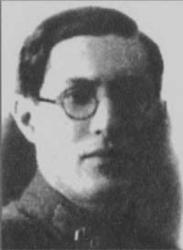
Sun Yatsen
 China
China- Biography of Sun Yat-sen
- Early Activism and Exile
- Creation of the Revolutionary Organizations
- First Temporary President of the Republic of China
- Second Revolution and Collaboration with Soviet Union
- Legacy
Biography of Sun Yat-sen
Sun Yat-sen (also spelled Sun Yixian, Sun Zhongshan, or Sun Wen) was a Chinese revolutionary and democrat. He was born on November 12, 1866, in Xiangshan (now Zhongshan), Guangdong province. He came from a peasant family and graduated from the medical institute in Hong Kong in 1892.
Early Activism and Exile
From a young age, Sun Yat-sen was influenced by anti-Manchu sentiments, opposing the ruling Qing dynasty in China. In 1894, he established the revolutionary organization Xingzhonghui, which attempted an unsuccessful armed uprising against the Qing dynasty on October 25, 1895. Forced to emigrate, Sun Yat-sen first went to Japan and then to the United States and Western Europe. During his time in exile, he actively planned and prepared for future anti-Manchu uprisings in China.
Creation of the Revolutionary Organizations
In 1905, Sun Yat-sen founded the Tongmenghui, an all-Chinese revolutionary organization, in Tokyo. The organization's program, developed by Sun Yat-sen, included the "Three Principles of the People": nationalism (overthrowing the Manchu-Qing dynasty and restoring China's sovereignty), democracy (establishing a republic), and people's welfare (equality of land rights based on utopian socialist ideas of American economist Henry George). Under the leadership of the Tongmenghui, various local anti-Manchu armed uprisings erupted in different provinces of China from 1905 to 1911. The successful Wuchang Uprising on October 10, 1911, proclaimed the Republic of China and marked the beginning of the Xinhai Revolution.
First Temporary President of the Republic of China
Upon his return to China from exile in late December 1911, Sun Yat-sen was elected as the first temporary president of the Republic of China. He assumed office on January 1, 1912, in Nanjing and played a crucial role in drafting the temporary constitution of the Republic of China. Sun Yat-sen believed that China could avoid the development of capitalism, a view that was considered similar to the Russian Narodniks, and had been noted by Vladimir Lenin. However, under pressure from internal reactionaries, Sun Yat-sen was forced to resign as president on April 1, 1912. Nevertheless, he continued to fight for the establishment of a democratic republican system in China, utilizing the newly formed Kuomintang (Nationalist Party) as a political vehicle, replacing the Tongmenghui.
Second Revolution and Collaboration with Soviet Union
During the period of military dictatorship under northern warlord Yuan Shikai, Sun Yat-sen established a new revolutionary organization called the Zhonghua Gemingdang (Chinese Revolutionary Party) in exile in Japan in 1914. In 1918, he sent a telegram to Vladimir Lenin and the Soviet government expressing his admiration for the hard-fought struggle of the Russian revolutionary masses and expressing hope for future cooperation between the revolutionary parties of China and Russia. At Sun Yat-sen's request, the Soviet government sent a group of military specialists, led by prominent commanders from the Russian Civil War such as Pavel Ivanovich Pavlov and Vasily Konstantinovich Blücher, to Guangzhou, where Sun Yat-sen's revolutionary government in southern China was based from 1923. In the autumn of 1923, Sun Yat-sen invited the experienced Russian Bolshevik revolutionary Mikhail Markovich Borodin to serve as his political advisor. With Borodin's assistance, the Kuomintang was reorganized. Sun Yat-sen maintained a close correspondence with Soviet diplomats, listening attentively to the advice of his friends from the USSR.
Legacy
Sun Yat-sen enriched the "Three Principles of the People" with new meanings. The principle of nationalism now meant the unity of all forces in the country to fight against imperialist domination in China, the elimination of Chinese militarist cliques, the unification of the country, and the achievement of national independence. The principle of democracy aimed for the democratization of the state and society, establishing constitutional republican governance. The principle of people's welfare, as reinterpreted by Sun Yat-sen, focused on fulfilling the demands of the peasants, such as "land to the tiller," improving the lives of workers, and limiting monopolistic capital. In 1924, Sun Yat-sen proclaimed three fundamental political tenets: an unbreakable alliance with the Soviet Union, collaboration with the Chinese Communist Party, and reliance on the working class and peasantry. These tenets became an integral part of the "Three Principles of the People." Sun Yat-sen's last signed document was an appeal to the Central Executive Committee of the Soviet Union, expressing hope for a future where a free and independent China would walk hand in hand with the Soviet Union toward a brighter future for humanity.