Tadamiti Kuribayasi
 Japan
JapanBiography of Tadamichi Kuribayashi
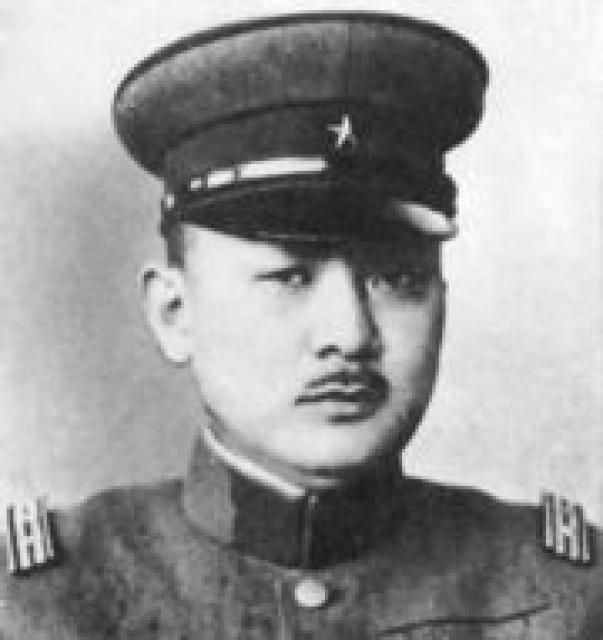
Tadamichi Kuribayashi was a Japanese military figure and general who served as the leader of the defense of Iwo Jima during World War II. He was born into a samurai family, with his father being a vassal of the ancient samurai clan Sanada. Kuribayashi attended high school in Nagano Prefecture, graduating in 1911. His writings during his school years showed his exceptional literary talent. Initially, Kuribayashi wanted to become a journalist and successfully passed the exams for the East Asian Humanities Academy. However, he decided to follow the recommendation of his teachers and enrolled in military school, which he graduated from in 1914. He specialized in cavalry and completed the Army Cavalry School in 1918. In 1923, he finished the Military Academy and got married that same year. He had three daughters and a son.
From 1927 to 1930, Kuribayashi served as an assistant military attaché in the United States, while also studying at Harvard University. From 1931 to 1933, he held the position of military attaché in Canada. By 1933, he became a lieutenant colonel and served in the General Staff until 1937 when he was promoted to colonel and appointed as the head of the military administration department of the Ministry of War. His extensive service abroad and knowledge of international affairs led him to consistently advocate for partnership between Japan and the United States, earning him the reputation of being "pro-American" and conflicting with the majority of the leaders in the General Staff. From 1939 to 1943, he served in China and commanded a cavalry regiment during the Battle of Khalkhin Gol against Soviet and Mongolian forces in 1939. In 1940, he became the commander of the 2nd Cavalry Brigade, and from 1940 to 1941, he led the 1st Cavalry Brigade. By 1940, he was promoted to Major General. From 1941 to 1943, he served as the chief of staff of the 23rd Army and participated in the December Battle of Hong Kong in 1941. Due to his military achievements, he was promoted to Lieutenant General. In 1943, he became the commander of the 2nd Guard Division stationed in Japan.
On June 30, 1944, Kuribayashi was appointed as the commander of the Japanese forces, consisting of approximately 21,000 soldiers, on the Ogasawara Islands, with Iwo Jima being the most strategically significant island. Before departing for the island, General Kuribayashi had an audience with Emperor Hirohito. Throughout the second half of 1944, he oversaw the construction of fortifications on the islands, particularly on Iwo Jima. Recognizing the overwhelming numerical and technological superiority of the American forces, Kuribayashi decided to shift the defense to the interior of the island, utilizing its terrain. Iwo Jima was transformed into a fortress with numerous underground fortifications, tunnels, strong points, pillboxes, and bunkers.
The general issued several orders to his subordinates that contradicted the traditional tactics of the Japanese army but proved effective in this situation. Artillery was forbidden from firing at landing ships, and shooting could only commence after the enemy had landed. Automatic weapons and artillery were only to be fired when the enemy had advanced approximately 500 meters inland to inflict maximum damage. Afterward, the artillery was to be relocated to the northern part of the island to continue the fighting. Banzai charges, which resulted in significant casualties and were deemed ineffective, were prohibited. According to Kuribayashi, "No Japanese soldier should die until he has killed ten enemies... Let each person consider the position entrusted to him as his own grave."
The soldiers were given a text called the "Oath of Brave Battle," which stated: "We will dedicate all our strength and our very lives to the defense of the island. We will attack enemy tanks with hand grenades, destroying them. We will infiltrate the enemy's positions and kill their soldiers. Each bullet will hit its target. Each of us will kill ten enemy soldiers before we ourselves perish in battle. Until the last man, we will exhaust the enemy with guerrilla attacks."
In a letter home, the general wrote, "The enemy may soon land on the island. When they do, we will face the fate of the defenders of Attu and Saipan. Our officers and soldiers understand the concept of 'death' very well. It is regrettable to end our lives here, fighting against the United States, but I want to defend this island as long as possible and prevent enemy air raids on Tokyo."
The Battle of Iwo Jima lasted from February 19 to March 26, 1945. Despite the fivefold numerical superiority and overwhelming firepower of the American forces, the Japanese troops successfully resisted, thwarting the construction plans of an airstrip on Iwo Jima intended for bombings on Japan. By March 10, the Japanese forces had exhausted their supplies of food and water but continued to resist in the northern part of the island. The fighting was extremely fierce, with a staggering loss of life on both sides. The US Marine Corps suffered 6,821 killed and approximately 17,000 wounded. Around a thousand Japanese soldiers were captured (216 by March 26, with others in the following weeks until May), while the rest perished. By March 19, American troops had reached the general's bunker, where he sent an apology to the emperor for failing to hold the island and stated that his troops were ready for the final battle. It was then that he composed his final tanka poem:
"The enemy is not defeated, I will perish in battle,
I will be born seven times,
To hold a halberd in my hands."
For his achievements in the Battle of Iwo Jima, Kuribayashi was promoted to the rank of full general, although the announcement did not reach him. In a desperate situation, on March 25, he issued his final order, allowing for an attack. There are different versions regarding his death. According to one, he performed a ritual suicide. According to another, he removed his insignia and decorations and participated in the final attack, dying in battle. His body was never found.
General Kuribayashi became one of the main characters in Clint Eastwood's film "Letters from Iwo Jima" (2006), portrayed by Japanese actor Ken Watanabe. The movie incorporates the general's letters to his family, which were published after the end of World War II.