Tadeusz Dolega-Mostowicz
 Poland
Biography of Tadeusz Dolega-Mostowicz
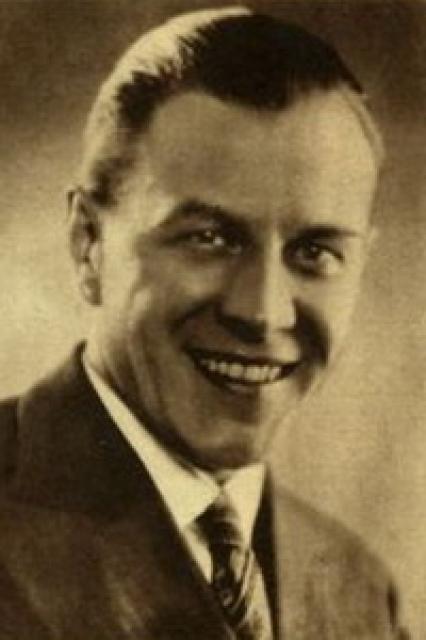
Tadeusz Dolega-Mostowicz was a Polish writer, journalist, and screenwriter. He was born into a prosperous family in Gluboko, Poland, where his father, Stefan, owned a well-respected estate known for its exemplary farming practices. His childhood memories of a peaceful and prosperous environment, as well as the social milieu of the local nobility, greatly influenced many of Dolega-Mostowicz's stories. The family later moved to Glubokoye, where their house was located on Krakowska Street (now known as Sovetskaya Street, house number 2).
He received his initial education at home, and later attended Vilnius Gymnasium, where he graduated in 1915. During his time at the gymnasium, he became involved in illegal organizations. While studying at Kiev University, he joined a Polish military organization. In 1919, during the Civil War, Dolega-Mostowicz volunteered for the Polish army and served until 1922.
In 1922, he settled in Warsaw and became a contributor and later an editor for the newspaper "Rzeczpospolita." It was during this time that he began his literary career. From 1925 onwards, his articles and feuilletons under the pseudonym T.M. started appearing in the newspaper. In the same year, he published his first stories. In 1926, he started writing under the new pseudonym - Dolega. It was during this time that his career as a journalist, feuilletonist, and writer took off. Tadeusz Dolega-Mostowicz actively opposed the regime of Józef Piłsudski and criticized the anti-democratic activities of the authorities in his sharp and satirical articles. As a result, he was once captured on the street and brutally beaten.
Tragic Death and Literary Works
During World War II, Dolega-Mostowicz organized a militia near the Romanian border, which maintained public order and ensured the safety of the residents of the town of Kuty in the absence of established authorities. He tragically died in September 1939 under unknown circumstances. According to one version, he was shot at point-blank range by a Soviet soldier while leaving the village. According to another version, he was killed by a stray bullet near Lviv.
Dolega-Mostowicz wrote in Polish and gained recognition with his first novel, "The Career of Nicodemus Dyzma," a sharp satire on the socio-political life of Poland during the regime of Józef Piłsudski, set in Western Belarus. In 1932, he published the stories "Kivony," "Unpaid Checks," and "Prosecutor Alicia Horn," which characterized the political phenomena of that time and the lives of the bourgeoisie. He authored novels such as "The Dalch Brothers & Co" (1933), "Mrs. Malinowska's World" (1934), "The Witch Doctor" (1937), "Professor Wilchur" and "Madam Ganka's Diary" (1939), among others.
In 1934, Dolega-Mostowicz began collaborating with the film industry, and by 1939, eight of his works had been adapted for the screen out of a total of sixteen. Some of his most popular screenplay adaptations include "Their Child," "Three Hearts," "Professor Wilchur," and "The Witch Doctor."
In 1978, Tadeusz Dolega-Mostowicz's remains were reburied in Warsaw. In 1998, on the occasion of his 100th anniversary, a memorial evening was held in Gluboko, along with an exhibition of his books.