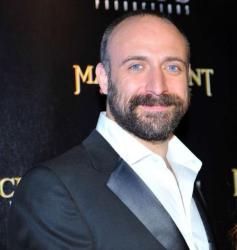
Talgat Nigmatullin
 Kyrgyzstan
Biography of Talgat Nigmatullin
Talgat Nigmatullin was an actor who truly embodied the role of a passionate dervish. Trusting and inclined to see miracles in everything, he had the ability to forgive any offense or deception, often saying, "Who am I to judge people?" Despite his outwardly reserved demeanor, he lived a tumultuous and emotionally rich inner life. His relationships with women were true dramas of emotion, although they never fully understood or accepted him for who he was - a constant seeker, restless. A hero of popular action films, a superman and spiritual seeker, champion of Uzbekistan in karate, poet, screenwriter, and director, he was a true idol of the youth in the 80s. His portraits adorned the covers of the magazine "Soviet Screen". He appeared in more than twenty films, including "The Seventh Bullet" (1972), "Armed and Very Dangerous" (1977), "Pirates of the 20th Century" (1979), "Right to Shoot" (1981), "The Adventures of Tom Sawyer and Huckleberry Finn" (1981), "Wolf Pit" (1983), "Alone and Unarmed" (1984), and "Confrontation" (1984). If he had lived a little longer than his 36 years, his star would have burned even brighter. No other actor of that time had as many legends and captivating rumors surrounding them. His eventful life was filled with sensationalism and mystery - a rise to fame and a personal life full of drama, mysterious mystical pursuits, and tragic circumstances of his death. Based on the memories of people who personally knew Talgat Nigmatullin, we will attempt to recreate his image for the current generation.
Early Life
Talgat Nigmatullin was born on March 5, 1949, in the mining town of Kyzyl-Kia, one of the central streets of which has been named after him since 2001. Information about Talgat's youth is contradictory. When asked where he learned to speak Russian so beautifully and correctly, he replied that in his childhood he had painstakingly transcribed "War and Peace" by hand. There is also a legend that he started practicing sports after a girl he liked laughed at his weak physique. But is any of this true? Those interested in the biographies of film stars will notice that "according to the genre," the hero must have had a difficult childhood with some strong shock that pushed him towards success.
Career
Talgat Nigmatullin was not immediately accepted into the State Institute of Cinematography (VGIK). After his first failure, he didn't want to leave Moscow and enrolled in the Circus and Variety Arts School, where he was gladly accepted. At that time, he already possessed a colorful appearance and undeniable talent. Soon, he was noticed at the Mosfilm studio, and in 1967, he was offered the role of a White Guard officer in the film "Ballad of a Commissar." This first role played a cruel joke on him. Talgat was so successful in portraying the young scoundrel in black lacquered gloves that it became his established image as an actor playing villains. But he always dreamed of something else. In 1971, after graduating from VGIK, Sergey Gerasimov's workshop, Talgat Nigmatullin became an actor at the Uzbekfilm studio while continuing his studies in the screenwriting department of the Higher Directorial Courses.
At that time, Eastern martial arts were a favorite sport among young people. Interest grew even more after the KGB of the USSR conducted large-scale actions against semi-legal sections of karate practitioners, where ethics and philosophy that differed from the "moral code of communist builders" were spreading. Talgat Nigmatullin, together with his institute friend Nikolay Eremenko, who played the lead role in "Pirates," demonstrated their Eastern combat skills on the big screen without the use of stuntmen, satisfying the demands of the audience at that time. In those years, queues lined up for kilometers in front of movie theaters. Street fighters practiced in the basements of five-story buildings. Literary enthusiasts gathered in kitchenettes on the floors above to read samizdat manuscripts in faint 32-copy versions. The internet did not exist yet, and only affluent families were just starting to have imported VCRs, on which they would play cassettes with Fellini's "8 1/2" interspersed with Bruce Lee movies.
It was also a time of widespread fascination with the mysteries of the universe. Magazines competed in the number of articles about psychics, healers, UFOs, and Tibetan yogis. But the popular press couldn't satisfy the spiritual thirst of people who vaguely sensed the onset of change. Lone seekers emerged. While enthusiastic fans of "Pirates of the 20th Century" stormed the ticket booths of the "50 Years of the USSR" cinema, known as "Poltinnik" on Chilanzar, a much more subtle and cruel drama unfolded in the nearby 8th block, hidden from the lenses of movie cameras. Talgat Nigmatullin was assigned the main role in the tragic climax of this drama - that of a martyr and innocent victim.
Personal Life
Talgat Nigmatullin was truly a dervish in love. Trusting and inclined to see miracles in everything, he had the ability to forgive any offense or deception, often saying, "Who am I to judge people?" Despite his outwardly reserved demeanor, he lived a tumultuous and emotionally rich inner life. His relationships with women were true dramas of emotion. He remembered and visited his first love, actress Irina Shevchuk, many years after they parted ways. He even wrote a beautiful song for his first wife, singer Larisa Kandalova. However, women never fully understood him. They did not accept him for who he was - constantly searching and restless. Only Khalida Khasanova, his second wife, loved Talgat in a way that she could endure his difficult character. Wise and gentle, this Eastern girl supported him in everything. Their son, Said Dashuk (his surname is from his stepfather, Belarusian director Vladimir Dashuk), also became a famous actor. Recently, he played the role of Ichthyander in the remake of Atanesyan's film "The Amphibian Man." It is difficult to say why Talgat and Khalida separated. Externally, they seemed like an ideal couple, although Khalida was not liked by Talgat's new friends. Abay believed that Talgat paid too much attention to his young wife, which hindered his "spiritual growth."
During the filming of the film "Provincial Romance" by Kyrgyz director Ubykeev, Talgat Nigmatullin saw Venus - his third wife - for the first time. They say he once came for her right on the set in an old "Moskvich" borrowed from friends. The car was filled with flowers. Talgat almost forcibly took Venus away to the registry office. A romantic story in the spirit of film star biographies?
Venera Nigmatullina was known to audiences from films such as "Wolf Pit" (1983), "Eastern Corridor" (1990), and "Flight of the Arrow" (1991). She is currently a prominent figure in the film industry in Kazakhstan.
Risk-taking and desperate, not knowing the measure in anything, Venera was perhaps precisely what Talgat needed. Unfortunately, she couldn't save him either. In February 1985, Abay traveled from Moscow to Vilnius to "set things in order" among the local mystics who had recently deified him but suddenly leaned towards the refined intellectual Valentas, who didn't want to understand why they had to pay "tribute" to some demagogue. Before leaving, Abay called Talgat in Tashkent, demanding that he come for a "showdown."
Talgat was planning to travel to Chisinau, where he was supposed to complete filming for the multi-episode film "Sergei Lazo." He was deeply conflicted but eventually responded to Abay's call, deciding to stop in Vilnius on the way. On the wires at my house, I suddenly wanted to give him one of my paintings as a keepsake. My hand reached out to a canvas titled "Dead Bird." Now, from what I've heard, this painting is kept in Venera Nigmatullina's house in Almaty, but it is wrapped in burlap and tightly tied with ropes. That evening, Talgat looked at it and asked, "Are you burying me?" I was taken aback and started mumbling something like, "No, not you. It's an allegory of the cruel life that destroys inspiration in us..." The painting was indeed painted under the impression of the tragic death of our friend Yavdat Ilyasov, who had drowned in a lake shortly before. If only I had understood what I was saying at that time! It seemed that fate was giving him one last chance. Nigmatullin was late for his flight at the Tashkent airport. However, universal love played a fatal service to him. The commander of the plane, upon learning that his delayed passenger was a famous actor, ordered the gangway to be held and delayed the departure for the sake of the celebrity. And Talgat still managed to board the plane. The Vilnius emergency station received a report that a person had died on Lenin Street. The arriving doctors found 119 wounds on Talgat Nigmatullin's body, 22 of which were on his head. The owner of the apartment said that hooligans attacked their guest on the street. The investigation soon arrested all the participants in the crime since neighbors had called the police in the middle of the night, complaining about the noise of the fight. The police responded to the patrol with a comment that they were celebrating a dissertation defense here. When the police inspected the premises, Talgat, already beaten to exhaustion, was hidden under a bedsheet and tied with ropes. Talgat Nigmatullin's tragic death shocked the film industry.