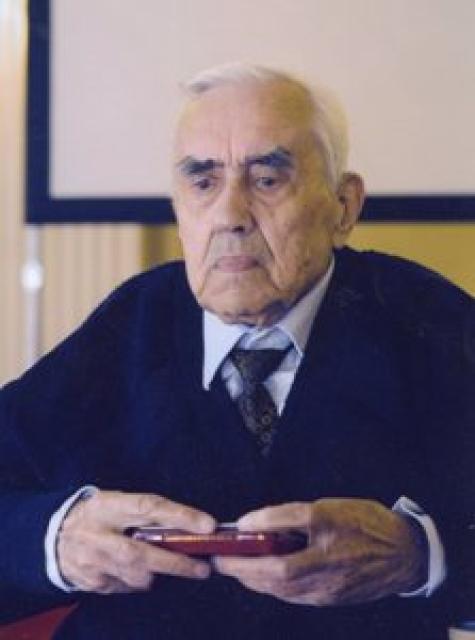
Teodor Shumovskiy
 Russia
- Early Encounter with the Quran
- A Journey into Translation
- Addressing Cultural and Religious Perspectives
- Witnessing Historical Turmoil
- A Scholarly Legacy
- A Time for Reflection
- A Message of Faith
Early Encounter with the Quran
In 1934, as a student at the philological faculty of Leningrad State University, Teodor Adamovich Shumovsky came across a unique copy of the Quran in the library. Written in Arabic and Latin, it dated back to 1592. Despite its impending disposal, Shumovsky recognized its significance and rescued it.
A Journey into Translation
Shumovsky devoted 18 years of his life to translating the Quran into Russian verse. Dissatisfied with existing translations, he sought to create a work that accurately reflected the original Arabic text. After meticulous study and diligent effort, he published his groundbreaking translation in 1994.
Addressing Cultural and Religious Perspectives
Shumovsky's translation was met with positive reception from the Muslim community. However, he faced criticism for his use of "God" instead of "Allah" in the text. He justified this choice by explaining that "Allah" is a non-Arabic term and that using "God" would make the text more accessible to Russian readers.
Witnessing Historical Turmoil
Shumovsky's life was marked by political turmoil. In 1938, he was arrested and sentenced to eight years in prison during the Stalinist purges. He endured harsh conditions, including forced labor on the White Sea Canal. Later, he was falsely accused of anti-Soviet activities and spent additional time in prison.
A Scholarly Legacy
Despite the challenges he faced, Shumovsky pursued his scholarly interests throughout his life. He had a profound knowledge of numerous languages, including Arabic, Sanskrit, Chinese, and Finnish. His research focused on diverse subjects, ranging from Arabic cartography to the history of the horse in the ancient East.
A Time for Reflection
In the twilight of his life, Shumovsky expressed concern about the increasing tensions between the East and West. He believed that the West had become closed off and overly reliant on its own perceived superiority. He urged for greater understanding and cooperation between cultures.
A Message of Faith
Although he did not consider himself a religious believer, Shumovsky acknowledged the existence of God. He believed that God's purpose for creating humans was to live honestly, compassionately, and peacefully. He saw empathy and hard work as the highest form of service to the divine.