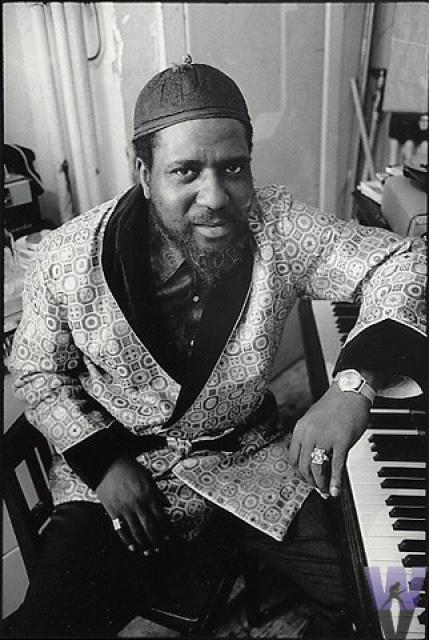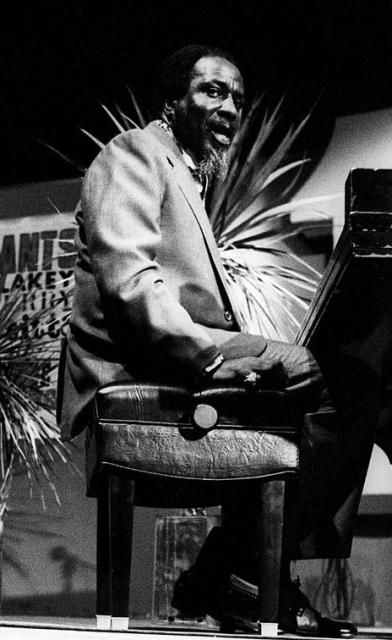
Thelonious Monk
 USA
USABiography of Thelonious Monk
Born in 1917 in Rocky Mount, North Carolina, Thelonious Monk was an American jazz pianist. His family moved to New York when Monk was still a young boy. He began playing the piano at the age of six and although he later took lessons, he can be considered a self-taught musician.
In 1939, Monk started performing in the clubs of Harlem in New York City. From 1941 to 1942, he played in an ensemble at the famous Minton's Playhouse with Charlie Parker, Dizzy Gillespie, and other musicians who were significant figures in the "bebop" style. Although Monk played with renowned boppers, he never considered himself part of the movement. By the mid-1940s, Monk developed his own individual style that did not fit within any particular genre. As a result, he was rarely invited to join other bop ensembles when they began working together and regularly recording after 1945. Monk either distanced himself from the movement or the movement evolved in a different direction than where Thelonious Monk was headed. His unique style made it difficult for him to find consistent work, and no recording studio offered him a contract. However, Monk remained determined and resolutely refused to change his playing style. Only Nellie Monk, Thelonious' wife, fully shared his views on music and more. He was extremely grateful to her during this period of his life when understanding was most needed. To support her husband, Nellie worked as a maid. Both Monk and his wife believed that eventually the audience would find him. Thelonious had no intention of compromising his style to fit the ever-changing tastes of the public. Coleman Hawkins, who always welcomed new talent, also tried to support the rebellious Monk. In 1944, Hawkins invited Thelonious to join a small ensemble that performed at a club on 52nd Street. In October of that year, the ensemble made several recordings. Monk maintained his gratitude towards Hawkins until the end of his days.
In 1951, Thelonious Monk faced significant trouble when he was arrested for drug possession. Although he managed to avoid jail time, he was banned from clubs that served alcohol for six years. Perhaps, it was for the best as Monk had no choice but to focus on his work. These years were not in vain, as from 1952 to 1955, the musician made a series of recordings. Then, in 1955, Monk recorded a series of compositions by Duke Ellington and other well-known jazz pieces to dispel the myth that he could only perform his own compositions.
In 1956, he released the album "The Unique Thelonious Monk" which brought him great success. The public finally recognized his talent. This success was also due in part to the enthusiastic review written by critic Nat Hentoff for the magazine "Down Beat." In 1957, Monk was once again invited to perform in clubs after his ban expired, and he found a place at the Five Spot club where representatives of avant-garde jazz gathered. Monk invited the relatively unknown saxophonist John Coltrane to join him. The meetings between these two musicians were a significant event in the history of jazz.
From 1959 to 1964, Monk led an orchestra, and from 1965 onwards, he led a quartet. He also participated in the ensemble "Giants of Jazz" with which he toured Europe in the 1970s.
Thelonious Monk played his final concert in the summer of 1976. Afterward, he minimized his contact with the outside world, showing little interest in music or life in general. On February 17, 1982, Thelonious Monk passed away from a stroke. He was buried at Ferncliff Cemetery in Hartsdale, New York.