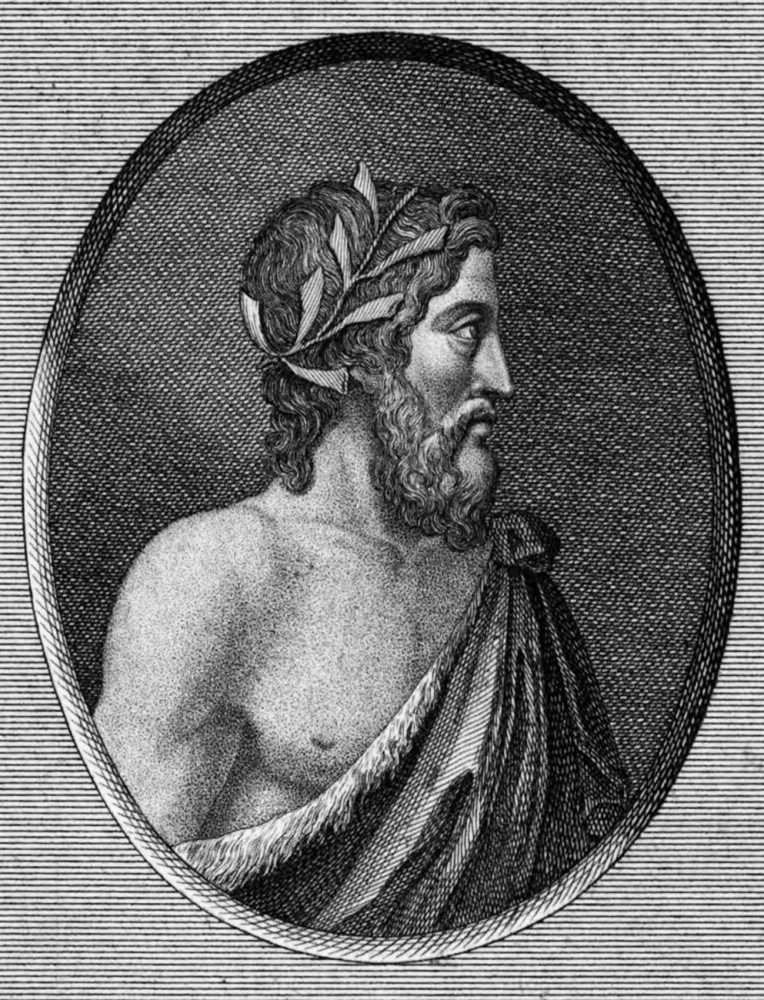
Theocritus
Theocritus, a Greek poet from Syracuse active in the early third century BCE, made country life feel vivid, musical, and wonderfully theatrical. His poems gave shepherds songs, rivalries, and loves of their own, while also turning busy Alexandria and the courts of powerful kings into poetic stages. Ancient and modern readers have often called him the founder of pastoral poetry, though his work ranges far beyond the countryside.
A life glimpsed through poems
Very little is known securely about Theocritus’ life. His poems and later biographical notices connect him with Syracuse in Sicily, the island of Cos, and Alexandria in Egypt. The exact sequence of his travels and the details of his education remain uncertain. He flourished during the reign of Ptolemy II Philadelphus, whose court drew Greek-speaking poets and scholars to the new capital of Alexandria.
Some of Theocritus’ verses address rulers directly. In one poem he praises Hiero II of Syracuse, apparently hoping for support; another celebrates Ptolemy II and his dynasty. These poems show how literary craft and royal patronage could intersect in the Hellenistic world, where poets moved among cities and courts in search of an audience and a livelihood.
The invention of a pastoral world
The poems later collected as the *Idylls* are his best-known legacy. Their title means something like “little pictures,” and they offer scenes rather than a continuous narrative: herdsmen compete in song, a lovesick Cyclops tries to win Galatea, and a woman in the city turns to magic after a lover abandons her. The rural settings feel immediate, but they are carefully shaped literary worlds, not simple transcripts of country life.
Theocritus’ shepherds sing in an artful Doric dialect and display the wit, ambition, and emotional intensity of sophisticated urban poetry. Their contests make song itself the subject: characters perform, judge one another, and use poetic skill to claim status. The countryside becomes a space where desire, rivalry, and art can be staged with playful elegance.
His range is equally striking in the urban poems. In *Idyll 15*, two women from Syracuse navigate the crowds of Alexandria to attend a festival of Adonis. Their lively conversation captures the sounds and social texture of a great city. Elsewhere, Theocritus retells myth in compact narrative poems and writes formal praise for rulers. Not every poem preserved under his name is necessarily his; the ancient collection includes works whose authorship remains debated.
Influence and afterlife
Theocritus’ influence reached far beyond the Greek-speaking world. The Roman poet Virgil adapted the pastoral tradition in his *Eclogues*, helping carry the genre into Latin literature. Later writers repeatedly returned to Theocritus’ singing shepherds and idealized landscapes, sometimes treating them as a model of rural innocence. His own poems are subtler: country life is both a setting and a literary performance, shaped by the same clever artistry found in the city.
The poet’s precise dates, movements, and personal relationships remain largely hidden from view. What survives instead is a distinctive voice that could shift from rustic song to urban comedy, myth, and royal praise. Theocritus transformed small encounters into polished scenes and established a flexible poetic tradition that later generations would continually reinvent.