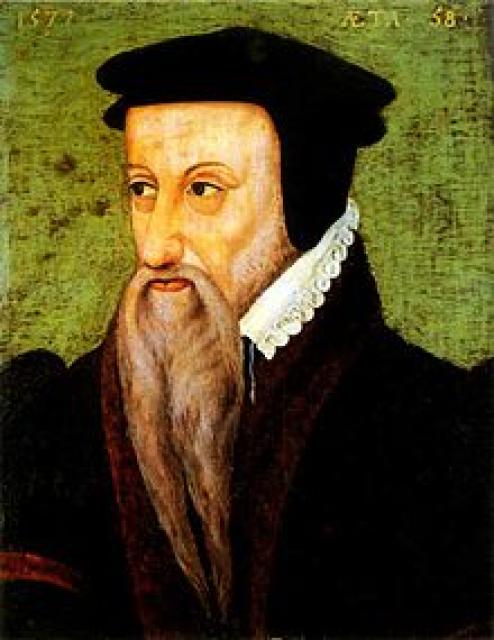
Theodore Beza
 France
- Theodore Beza: A Leading Figure of the Protestant Reformation
- Conversion to Protestantism and Academic Career
- Leader of the Genevan Reformation
- Scholarly Contributions
- Biblical Studies
- Legacy
Theodore Beza: A Leading Figure of the Protestant Reformation
Early Life and InfluencesTheodore Beza was born in 1519 in Vézelay, France. He studied at the University of Orléans, where he was influenced by Melchior Volmar, an early follower of Martin Luther in France.
Conversion to Protestantism and Academic Career
In 1548, Beza converted to Protestantism and moved to Geneva, Switzerland. He taught Greek and theology at the universities of Lausanne and Geneva, becoming a close associate and disciple of John Calvin.
Leader of the Genevan Reformation
Upon Calvin's death in 1564, Beza was elected his successor. He led the Genevan Reformation in a spirit of orthodox Calvinism, transforming the city's theological school into a model institution.
Scholarly Contributions
Beza was not only a religious leader but also an accomplished scholar. He published his early Latin poems in his Poёmata Juvenilia, establishing himself as a leading poet of his time. His other works include Tractationes theologicae (Theological Treatises), De jure magistratum (On the Right of Magistrates), Icones (Portraits), and Epistolae theologicae (Theological Letters).
Biblical Studies
Beza made significant contributions to biblical studies. He was the first to publish a critical edition of the Greek text of the New Testament and wrote numerous commentaries on biblical books. He bequeathed a New Testament manuscript to Cambridge University, known as Codex Bezae (Codex D).
Legacy
Theodore Beza died in Geneva on October 13, 1605. He left an enduring legacy as a leader of the Protestant Reformation, a renowned scholar, and an influential figure in the history of Christianity.





