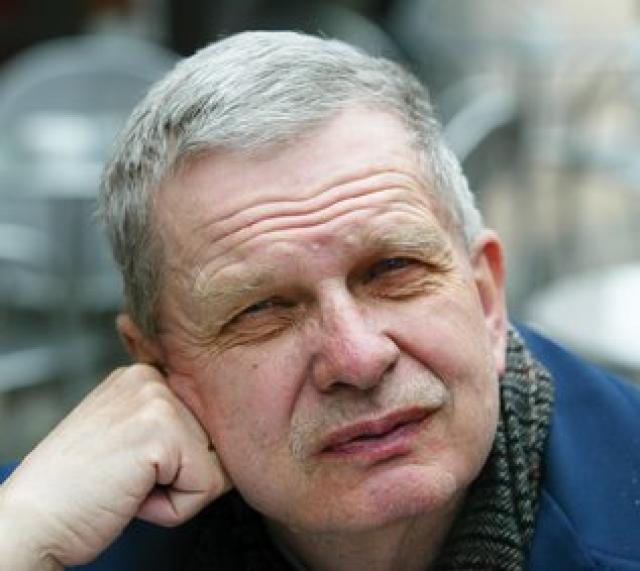
Tomas Venclova
 Lithuania
Biography of Tomas Venclova
Tomas Venclova was a Lithuanian poet, translator, literary critic, essayist, dissident and human rights activist. He was born in 1937, the son of Lithuanian poet Antanas Venclova. During the Great Patriotic War, when his father, who held high Soviet positions, was evacuated, Tomas lived with relatives in Vilnius and Kaunas. In 1946, he settled in Vilnius and later graduated from Vilnius University with a degree in Lithuanian language and literature in 1960.
Literary Career
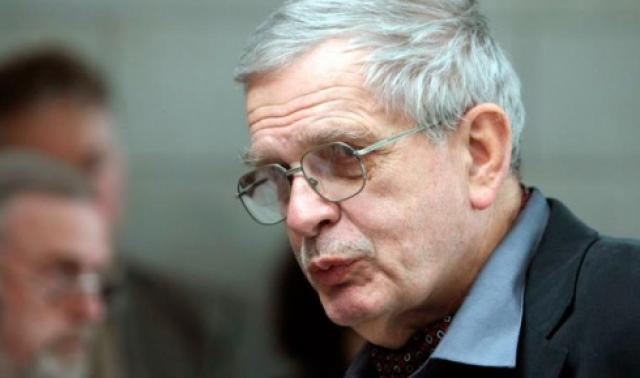
Venclova was one of the founders of the Lithuanian Helsinki Group, which was established on December 1, 1976. However, in 1977, he was expelled from the Soviet Union. In exile, he maintained close relationships with Joseph Brodsky and Czeslaw Milosz. He became a professor of Slavic languages and literatures at Yale University in the United States.
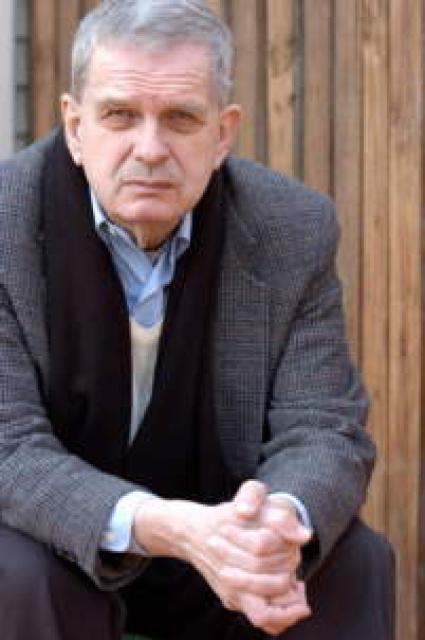
Venclova made his literary debut with the popular science book "Rockets, Planets, and Us" in 1962. His first poetry book, "The Sign of Speech," was published in 1972. He translated the works of Anna Akhmatova, Boris Pasternak, Joseph Brodsky, Osip Mandelstam, Velimir Khlebnikov, T.S. Eliot, Charles Baudelaire, Oscar Milosz, Lorca, Rilke, Auden, Pound, Prévert, Karol Wojtyła, Zbigniew Herbert, Czesław Miłosz, Wisława Szymborska, and other poets into Lithuanian. Venclova has authored several poetry books, collections of essays, literary criticism, and historical-literary works. He also wrote a guidebook to Vilnius, which has been translated into several European languages, including an English version in 2009 titled "Vilnius: A Guide to Its Names and People."
Venclova's poetry has been translated into English, Hungarian, German, Polish, Portuguese, Russian, Slovenian, Czech, Swedish, and other languages. His Russian-language poetry has been published in translations by Vitaly Asovsky, Joseph Brodsky, Vladimir Gandelsman, Natalya Gorbanevskaya, Georgy Efremov, Viktor Kullov, Alexander Kushner, Konstantin Rusakov, Pavel Shkarin, and other poets and translators. His main works focus on various aspects of poetics, the history of Russian literature, especially the Silver Age, contemporary Lithuanian literature, and its past, as well as Polish literature. Notably, his monograph on Alexander Wat, titled "Aleksander Wat: Life and Art of an Iconoclast" was published in 1996.
Awards and Honors
Venclova has been honored with numerous awards for his creative achievements. He was awarded the Order of the Grand Duke Gediminas (1995), the Order of the Cross of Vytis (1999), the National Prize for Culture and Arts (2000), the Statue of St. Christopher (a prize from the city of Vilnius, 2002), and the Yatviazhsky Prize of the Poetic Autumn in Druskininkai (2005). He received honorary doctorates from Maria Curie-Sklodowska University in Lublin (1991), Jagiellonian University in Krakow (2000), Nicolaus Copernicus University in Toruń (2005), and Vytautas Magnus University in Kaunas (2010).
In 2007, Venclova was awarded the Medal of the Hungarian Revolution of 1956 in Vilnius for his significant intellectual contribution to the contemporary understanding of the true meaning of the Hungarian anti-Soviet uprising. In October 2008, he received the Baltic Star International Prize for the development and strengthening of humanitarian ties in the Baltic region in St. Petersburg. This prestigious prize was established in 2004 by the Ministry of Culture and Mass Communications of the Russian Federation, the Union of Theatre Workers of the Russian Federation, the Committee on Culture of St. Petersburg, the World Club of Petersburgers, and the Baltic International Festival Center. Other recipients of this award include Daniil Granin, Raimonds Pauls, and Ingmar Bergman.


