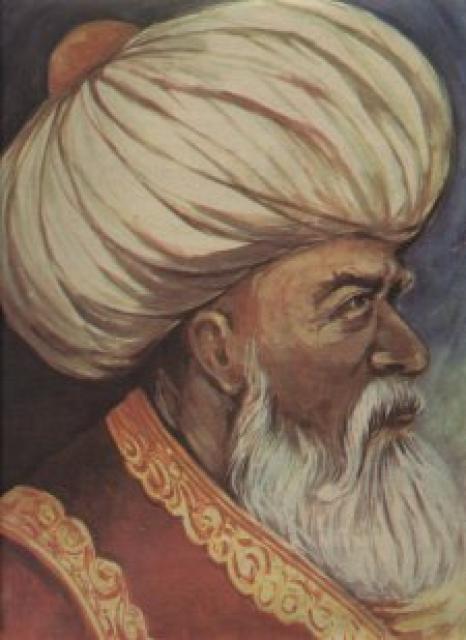
Turgut Reis
 Turkey
- Early Life and Military Career
- Rise to Prominence
- Partnership with Hayreddin Barbarossa
- Mediterranean Conquests
- Governorship and Naval Exploits
- Capture and Imprisonment
- Return to Naval Dominance
- Later Career and Legacy
Early Life and Military Career
Turgut Reis was born in 1485 in Bodrum, on the Aegean coast of Asia Minor. His family was of Greek origin, and he was captured and converted to Islam by the Turks at an early age. At the age of 12, Turgut's exceptional skills in wielding spears and arrows caught the attention of an Ottoman army commander, who enlisted him into the military.
Rise to Prominence
Turgut quickly became a skilled mariner and an excellent gunner, skills that would later prove invaluable in his future success. After the death of his master, Turgut sailed to Alexandria and joined the fleet of the corsair Sinan Paşa. His proficiency with ship cannons earned him a prominent position within the corsair's crew. He soon mastered naval warfare and became the captain of a brigantine, which he co-owned with several other sailors. After several successful campaigns, he gained sole ownership of the vessel.
Partnership with Hayreddin Barbarossa
In 1520, Turgut joined the fleet of Hayreddin Barbarossa, with whom he would later forge a close friendship. Turgut was promoted to the rank of Barbarossa's chief lieutenant and commanded a flotilla of 12 galleys. In 1526, Turgut captured the fortress of Capo Passero in Sicily. Between 1526 and 1533, he repeatedly raided ports in the Kingdom of Sicily and the Kingdom of Naples, intercepting ships sailing between Spain and Italy.
Mediterranean Conquests
In May 1533, Turgut captured two Venetian galleys. In June and July 1538, he accompanied Barbarossa in the Adriatic Sea, where they seized several fortresses along the Albanian coast. In August 1538, Turgut captured a fortress on the island of Crete and several other Venetian possessions in the Aegean Sea. In 1539, Turgut led a force of 36 galleys and galleots in a fierce battle to retake Castelnuovo, returning the city to Ottoman control. During the battle, he sank two Venetian galleys and captured three others. Later that year, while landing on Corfu, he engaged with 12 Venetian galleys under Francesco Pasqualigo and seized the galley of Antonio da Canal.
Governorship and Naval Exploits
In 1539, Turgut was appointed governor of the Mediterranean island of Djerba. In 1540, he conducted raids along the coasts of Sicily and Spain, as well as in the Tyrrhenian Sea. Turgut later attempted to establish a base on Corsica with his fleet, but he and his men were caught off guard by a combined enemy force.
Capture and Imprisonment
Turgut was taken prisoner and remained captive in Genoa for four years, during which time he was forced to work as a galley slave. A ransom was offered for his release, but it was rejected by the authorities. Only in 1544, when Barbarossa besieged Genoa, did the Genoese authorities negotiate Turgut's freedom. His release cost his friend 3,500 gold ducats.
Return to Naval Dominance
Almost immediately, Barbarossa placed several of his ships under Turgut's command, and he continued his military campaigns in the Tyrrhenian Sea, off the coasts of Sicily, Corsica, and other islands. After Barbarossa's death in July 1546, Turgut succeeded him as supreme commander of Ottoman naval forces in the Mediterranean.
Later Career and Legacy
In July 1547, Turgut led a raid on Malta with a force of 23 ships. In 1548, he was appointed governor-general of Algiers. Throughout 1549 and 1550, Turgut conducted further raids, terrorizing ports in Sardinia, Spain, Tunisia, and Malta. In August 1551, Turgut captured Tripoli, Libya. In 1552, Sultan Suleiman appointed Turgut as commander of the Ottoman fleet, which he led on an expedition to Italy.
On August 5, 1552, Turgut defeated a Spanish-Italian fleet under Andrea Doria in the famous Battle of Ponza. Following this victory, the sultan appointed the great admiral beylerbey of the Mediterranean Sea. In March 1556, Turgut was appointed pasha of Tripoli. He initiated major fortifications around the city and harbor, with a new bastion (Dar el Barud) and a new fortress, named after himself, built at the site of the old citadel.
Turgut's final notable battle was the Battle of Djerba. In March 1560, a Spanish fleet of 90 ships appeared off Djerba. In May, the fleet of Admiral Piyale Pasha arrived to relieve the island. As Piyale Pasha's fleet pursued the Spanish, Turgut occupied the island with his force of 5,000. After a protracted siege, Turkish authority over the main fortress on Djerba was restored.
Turgut Reis was killed by a cannonball in 1565 during an Ottoman-Habsburg conflict. Tragically, the great warrior died as a result of friendly fire. According to some accounts, he was fatally wounded by a stone and died a few days later in hospital.
Regardless of the circumstances of his death, Turgut was buried with great honor in Tripoli. The town of Turgutreis is named in his honor, and there is a statue dedicated to the legendary admiral in the town. Several ships have also been named after Turgut Reis.


