Ugo Kavallero
 Italy
Italy- Ugo Cavallero
- World War I and Post-War Service
- Fascist Years
- East African Command and Axis Alliance
- Chief of General Staff and Albania
- German Invasion of Greece
- Military Reforms and Collaboration
- Dismissal and Arrest
- Death and Legacy
Ugo Cavallero
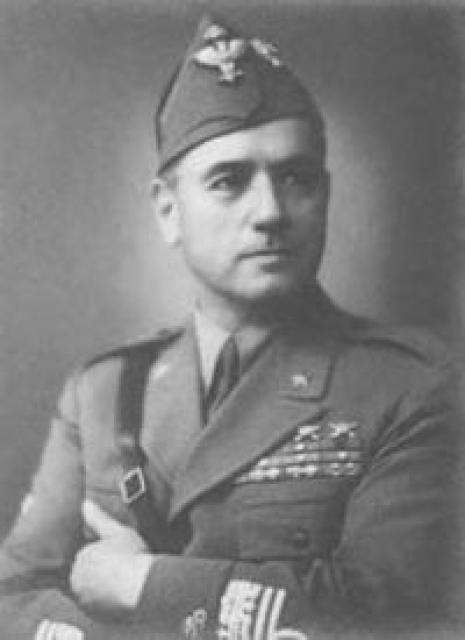
Early Life and Military EducationUgo Cavallero, born in Ceva, Italy, in 1880, embarked on a distinguished military career at a young age. He graduated from the Military School in Modena in 1900 and subsequently became a top graduate of the Academy of General Staff in 1911.
World War I and Post-War Service
Cavallero served in the 59th Infantry Regiment and distinguished himself in the Libyan Campaign of 1913 and World War I. He was appointed Chief of the Operations Department of the Supreme Command in 1918 and became a Brigadier General in December of the same year. In 1919, he served as President of the Italian military delegation at the Versailles Peace Conference.
Fascist Years
After leaving military service in 1920, Cavallero returned following the rise of Fascism. He held the post of Undersecretary of the War Ministry from 1925 to 1928. Later, he became Director General of the Ansaldo Trust, a position that brought allegations of embezzlement, which he managed to dismiss.
East African Command and Axis Alliance
In 1937, Cavallero was appointed Commander-in-Chief of Italian forces in East Africa. From 1939, he served as military advisor to Galeazzo Ciano and chaired the Coordinating Committee for the implementation of the "Pact of Steel" in Berlin. He was a staunch supporter of Fascism and had strong pro-German sympathies.
Chief of General Staff and Albania
On December 6, 1940, Cavallero succeeded Pietro Badoglio as Chief of General Staff. After the defeat of Italian troops by the Greeks, he was appointed Commander of the "Albania" Army Group in January 1941, while retaining his role as Chief of Staff. However, Italian forces suffered a series of setbacks, and Mussolini took personal command, ordering an offensive on March 9. The operation failed, and Cavallero convinced Mussolini to retreat on March 16.
German Invasion of Greece
Despite continuing setbacks, Cavallero organized an offensive after Germany invaded Greece. Although this effort also failed, the Greek command was forced to surrender to both German and Italian forces on April 24, 1941.
Military Reforms and Collaboration
Cavallero undertook ambitious reforms to reorganize the Italian army, modeled on the German Wehrmacht. He oversaw the transformation of the General Staff from an advisory body to an organ of military command. He enjoyed German support, which strained his relationship with Mussolini.
Dismissal and Arrest
After the fall of Tripoli in 1943, Cavallero was dismissed as Chief of Staff. He was later arrested by Badoglio and interned. However, he was released after German forces entered Rome in September 1943. The German command attempted to persuade Cavallero to collaborate, but he refused.
Death and Legacy
On September 25, 1943, Cavallero was found dead on a garden bench. The most likely cause of his death is believed to be suicide, although there have been rumors of assassination by German intelligence.