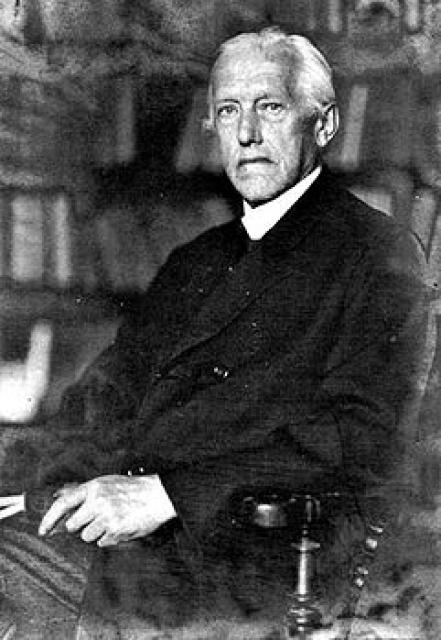
Ulrich Vilamovits-Mellendorf
 Germany
- Ulrich von Wilamowitz-Möllendorf: German Philologist and Classicist
- Academic Career
- Notable Contributions
- Textual Criticism and Editing
- Literary History and Aesthetics
- Polemics and Scholarly Engagements
- Public Life and Legacy
- Personal Life and Family
Ulrich von Wilamowitz-Möllendorf: German Philologist and Classicist
Early Life and EducationUlrich von Wilamowitz-Möllendorf, Germany's most distinguished classical philologist, was born to an aristocratic family on December 22, 1848, at his ancestral estate of Markowitz in Provinz Posen (present-day Poznań, Poland). His classical education began at the Gymnasium in Schulpforta, where he studied from 1862 to 1867. He then pursued higher education at the universities of Bonn (1867-1869) and Berlin (1869-1870).
Academic Career
After a brief interruption for military service during the Franco-Prussian War, Wilamowitz resumed his academic endeavors. He taught at the universities of Berlin (1874-1876), Greifswald (1878-1883), Göttingen (1883-1897), and finally Berlin again (1897-1929). Over time, he became a leading figure in classical philology in Germany.
Notable Contributions
Philological SynthesisWilamowitz integrated philology and the study of ancient material culture, revitalizing the field by challenging the dominance of historical methodologies. He expanded the scope of classical philology to include the Hellenistic period, shifting the focus from solely the Classical period.
Textual Criticism and Editing
Wilamowitz's "Greek Reader" (1902), a meticulously annotated collection of Greek literary samples, revolutionized the teaching of ancient languages. He also critically edited works by Greek lyricists, including Bacchylides, Pindar, and tragedians such as Aeschylus and Euripides.
Literary History and Aesthetics
Wilamowitz's "History of Greek Literature" (1905) reflected the cultural-historical school of thought. He proposed that tragedy evolved from choral lyric rather than directly from Dionysian cult practices.
Polemics and Scholarly Engagements
Wilamowitz published polemics against Friedrich Nietzsche's "The Birth of Tragedy" (1872, 1873), wrote a comprehensive history of classical philology (1921), and crafted a collection of memoirs (1928) providing insights into the academic landscape of his time.
Public Life and Legacy
Wilamowitz was an influential member of the Berlin Academy of Sciences and played a role in the election of Russian classicist M. I. Rostovtsev. His political views were conservative and nationalistic. He supported the German imperial court and participated in public demonstrations backing German policies during World War I.
Personal Life and Family
Wilamowitz married Marie, the eldest daughter of renowned novelist Theodor Mommsen. His own daughter, Dorothea, married classical scholar Friedrich Hiller von Gaertringen. Wilamowitz lived a long life, passing away on September 25, 1931, at the age of 82.



