
Umaru Musa Yar'Adua
 Nigeria
Biography of Umaru Musa Yar'Adua
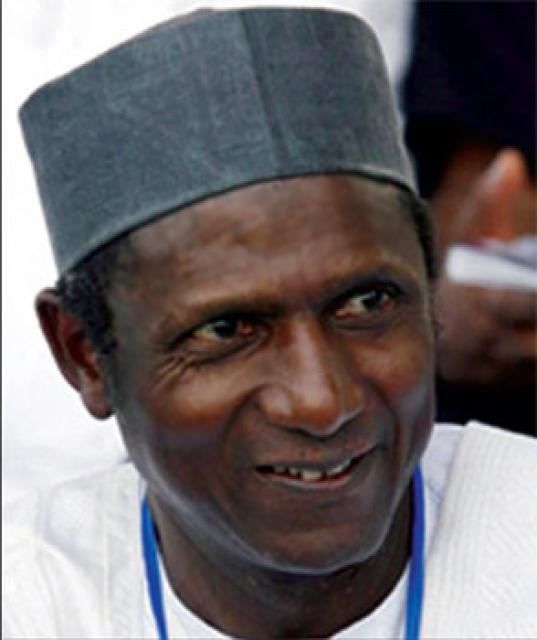
Umaru Musa Yar'Adua, the second president of the Fourth Nigerian Republic, was born on August 16, 1951, in the city of Katsina, into an aristocratic Fulani family. His father served as a minister in the port city of Lagos during the First Republic, where he attained the title of Keeper of the Treasury. Yar'Adua inherited the title and privileges after his father's death. His name, Umaru, means "Prosperous" in the local dialect.

Education and Early Career
Umaru Musa received his primary education at Rafukka Primary School and Dutsinma Boarding Primary School. From 1965 to 1968, he attended the Government College Keffi before continuing his education at Barewa College. In 1972, Yar'Adua enrolled in Ahmadu Bello University in Zaria, where he graduated with a bachelor's degree in chemistry. In 1978, he returned to the university and obtained a master's degree in analytical chemistry. Following his studies, Umaru Musa Yar'Adua embarked on a career in teaching. Despite his titles and privileges, he worked as a simple teacher at Holy Child College. From 1976 to 1983, he lectured at Katsina College of Arts, Science, and Technology in Zaria. In 1983, he concluded his teaching career and entered the business sector. He worked at Sambo Farms, serving as the company's managing director from 1983 to 1989. Additionally, Yar'Adua was a board member of the Katsina State Farmers' Supply Company from 1984. He held various leadership positions in different companies, including Habib Nigeria Bank (1995-1998), Lodigiani Nigeria (1987-1999), Hamada Holdings (1983-1999), and Nation House Press (1995-1999).
Political Career
During the Second Republic, Yar'Adua joined the People's Democratic Party of Nigeria, founded by his brother, General Shehu Musa Yar'Adua. Interestingly, his father served as the deputy chairman of another party, the National Party of Nigeria, at the time. In 1999, Umaru Musa Yar'Adua was elected as the governor of his home state, Katsina. Under his leadership, Katsina became the fifth state in northern Nigeria to adopt Sharia law. In 2002, the case of Amina Lawal, who was sentenced to death by stoning for adultery, garnered significant international attention.
In 2006, with the support of then-president Olusegun Obasanjo, Yar'Adua announced his candidacy for the presidency of Nigeria. Many attribute his victory in the elections not only to Obasanjo's endorsement but also to his impeccable reputation. He strongly punished those involved in corruption and made efforts to eradicate it. Yar'Adua won the election with 70% of the votes. However, many observers and the opposition disputed the official results, alleging electoral fraud.
Presidency and Legacy
After his election victory, Umaru Musa Yar'Adua formed a government of national unity by inviting opposition parties to join. In June 2007, he disclosed his income to the press, setting an example for other politicians. Throughout 2007, both the international and Nigerian media closely followed Yar'Adua's health. On March 6, 2007, he was flown to Germany under suspicion of kidney disease. The president's representatives consistently concealed any information about his health, claiming that he was only suffering from stress and had traveled to Germany for rest and treatment. However, many speculated that Yar'Adua had suffered a heart attack. Nonetheless, he returned to the country shortly after and continued his presidency.
Umaru Musa Yar'Adua's presidency was marked by several challenges and achievements, including efforts to address corruption, promote economic development, and improve the country's infrastructure. However, his tenure was cut short due to his declining health. Yar'Adua passed away on May 5, 2010, and was succeeded by his vice president, Goodluck Jonathan.