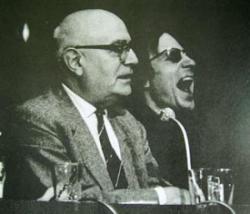
Veniamin Hvostov
 Russia
- Venjamin Mikhailovich Khvostov
- Education and Early Career
- Neo-Kantianism and Social Philosophy
- Ethics and Social Norms
- Contributions to Jurisprudence
- Collaboration and Influence
Venjamin Mikhailovich Khvostov
Venjamin Mikhailovich Khvostov (1868-1920) was a prominent Russian sociologist, philosopher, and legal scholar who made significant contributions to social thought and jurisprudence.
Education and Early Career
Khvostov graduated from the law faculty of Moscow University. He began his academic career in 1899 as a professor of law at Moscow University. He also taught at the Higher Women's Courses and the private A. L. Shanyavsky University.
Neo-Kantianism and Social Philosophy
Khvostov was a proponent of neo-Kantianism, a philosophical school that emphasized the role of reason and experience in knowledge. His social philosophy was influenced by the ideas of Wilhelm Wundt, Georg Simmel, and Émile Durkheim.
He distinguished between theoretical sociology, which investigated social laws and relationships, and social typology, which sought to identify and characterize the main historical types of social organization.
Ethics and Social Norms
Khvostov devoted considerable attention to ethical issues in his writings. He examined the relationship between morality and law, as well as the role of ethical norms in society. He argued that ethics and law had distinct spheres of influence, with ethics guiding individual conduct and law regulating social relationships.
Contributions to Jurisprudence
As a legal scholar, Khvostov made significant contributions to jurisprudence. He developed a theory of law as a system of social norms that enforced social order. He also argued for the importance of legal positivism, which held that law is derived from the authority of the state rather than from moral principles.
Collaboration and Influence
Khvostov collaborated with several intellectual journals, including "Questions of Philosophy and Psychology." His ideas influenced a generation of Russian sociologists and legal scholars. His work remains a valuable source of insight into the development of social and legal thought in Russia during the late 19th and early 20th centuries.