Vera Arbuzova
 Russia
- Biography of Vera Arbuzzova
- A Modest Dancer
- The Birth of Dramatic Dance
- The Influence of Boris Eifman
- Connection with the Audience
- Genuine and Natural
- Collaboration and Succession
- A Journey in Ballet
- Understanding and Support
- The Artist and the Choreographer
- Personal Life and Traditions
- Friendships
- The Future
- Life After Dance
Biography of Vera Arbuzzova
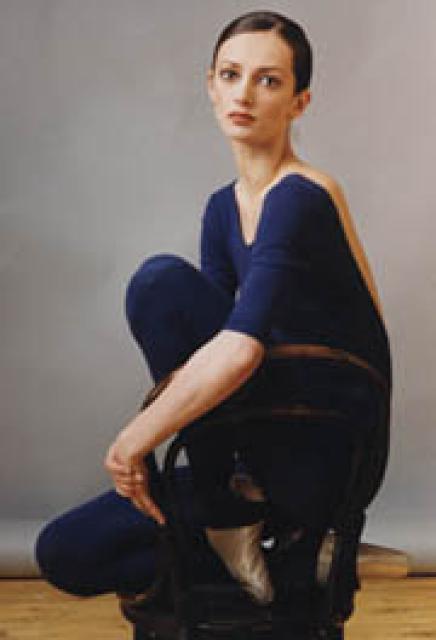
Vera Arbuzzova is a dancer and a rare gem in the world of ballet. She is a member of the Boris Eifman Theater and has recently been awarded the "Soul of Dance" prize by the Ministry of Culture of the Russian Federation and the magazine "Ballet". Arbuzzova's performances have captivated audiences in major cities around the world, with her memorable portrayals of characters such as the cunning Grushenka in "The Brothers Karamazov," the aristocratic Nadezhda von Meck in "Tchaikovsky," the passionate and mad "Red Giselle," and the desperately in love "Anna Karenina."
A Modest Dancer
Arbuzzova is known for her modesty and shyness, avoiding the limelight despite her remarkable talent. When asked why she avoids the social scene, she simply states that she doesn't enjoy it and finds no interest in it. For her, the soul of dance lies in the love for the profession and the complete dedication it requires, even if one has a family.
The Birth of Dramatic Dance
In the Boris Eifman Theater, each performance is a psychological drama. Arbuzzova reveals that the process of creating a ballet takes about a year, during which she and her fellow dancers live with their characters. She finds it fascinating to delve into their emotions and even started studying psychology to better understand the intricate workings of the mind. Arbuzzova believes that the characters they bring to life on stage have a profound impact on the lives of the artists themselves.
The Influence of Boris Eifman
When asked about the extent to which she must conform to Boris Eifman's vision, Arbuzzova emphasizes that each artist remains an individual and brings their own personality to the role. She explains that all three casts of "Anna Karenina" are completely different performances. Arbuzzova also shares her perspective on the character of Karenina, stating that she cannot judge her for abandoning her child, as circumstances often overpower us.
Connection with the Audience
Arbuzzova finds it fascinating to see the eyes of the audience when performing, especially when the line between the stage and the audience blurs. She believes that people empathize with the characters and their stories. Despite the demands of dancing, Arbuzzova manages to pay attention to the reactions of the audience, as she gradually becomes more comfortable on stage.
Genuine and Natural
Arbuzzova describes herself as a sincere and natural person. She believes that authenticity is important, as any falseness becomes immediately apparent on stage. While it is possible to create an image and rehearse it in front of a mirror, pretending to be someone else for a long time is impossible. The stage reveals one's true self. It is not surprising that she feels a connection to the role of Giselle, but she also enjoys dancing the character of Anna Karenina.
Collaboration and Succession
Arbuzzova dismisses any feelings of jealousy towards her colleagues in other casts. She believes that having different casts is beneficial as it ensures the growth of the upcoming generation. The theater should not suffer due to personal vanity. She also reflects on the younger dancers in the company, noting that Boris Eifman now devotes his energy to them, just as he did with her when she was starting out.
A Journey in Ballet
When asked if she was immediately accepted as a soloist, Arbuzzova reveals that everyone is initially invited as a soloist with grand prospects. However, she spent two years in the corps de ballet, an important stage for someone from a different school to adapt to a new style of dance. While she worked during that time, she always wondered when her turn would come.
Understanding and Support
Luckily, Arbuzzova's husband understands the demands of her profession because he used to be a dancer himself. Finding a life partner who understands the world of ballet is challenging, but she considers herself fortunate. When asked about her temperament, Arbuzzova admits to being capricious, sometimes both at home and in the theater. She acknowledges the patience and support of her husband, who tolerates her worries, exhaustion, and pains.
The Artist and the Choreographer
Arbuzzova discusses her relationship with Boris Eifman, stating that they both tolerate each other's challenging personalities. She believes that they, as well as the entire company, shape and nurture each other. Eifman's theater is his creation, and everything revolves around him.
Personal Life and Traditions
In her free time, Arbuzzova enjoys being at home, especially in the kitchen. She reveals that she loves making pelmeni (a type of dumpling) as she comes from a large family with traditions of having meals together. The memories of those times warm her heart, and she dreams of preserving this tradition in her own family.
Friendships
Arbuzzova's friends are not from the theater but rather from other professions, such as doctors and actors. These friendships are genuine and close, providing her with a support system outside of her work environment.
The Future
When asked how many more years she plans to dance, Arbuzzova admits that she doesn't think she will still be performing in ten years. In Europe, dancers do not have long careers. She believes that ballet is an art form for the young. While she regrets how quickly their artistic lives pass by, she fondly recalls being part of the "rising stars" group for about six years.
Life After Dance
Arbuzzova sees herself as a strong person who will have the willpower to say goodbye to the stage. She expresses a desire to become a psychologist, as she is interested in human relationships and the search for understanding. However, she acknowledges that her profession will lead her down a different path. She plans to obtain a teaching degree from the Vaganova Academy and become a ballet instructor for children.