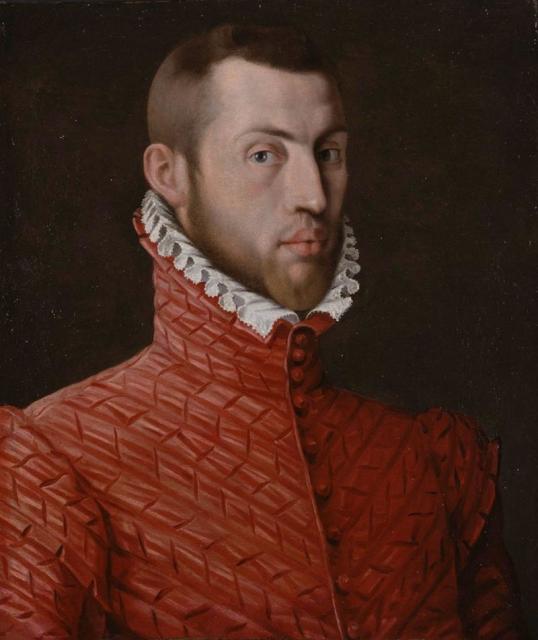
Vespasiano I Gonzaga
 Italy
Italy- Vespasiano Gonzaga: Italian Aristocrat and Renaissance Man
- Military Career
- Patron of the Arts
- Reconstruction of Sabbioneta
- Personal Life
- Viceroy and Scholar
- Later Years and Legacy
Vespasiano Gonzaga: Italian Aristocrat and Renaissance Man
Early Life and EducationVespasiano Gonzaga was born in Sabbioneta, Italy, in 1531. Descended from an aristocratic family, he was the son of Luigi "Rodomante" Gonzaga and Isabella Colonna. His early education was overseen by his paternal grandfather, Lodovico Gonzaga, who assumed guardianship after his mother's second marriage. Trastevere, his mother's half-brother, played a significant role in shaping his intellectual development.
Military Career
In 1544, at the tender age of 13, Vespasiano embarked on a military career. He served as a page to Prince Philip of Spain, gaining recognition for his bravery and skill. During his time in Spain, he became close with Philip and received a Spanish noble title.
Patron of the Arts
Vespasiano's passion for the arts was evident throughout his life. He patronized renowned artists such as Leone Leoni, Bernardino Campi, and Jean de Ville, who adorned his residence in Sabbioneta with magnificent works. He also founded an art gallery and established a printing press for the publication of Jewish literature.
Reconstruction of Sabbioneta
Vespasiano's architectural achievements are particularly noteworthy. He transformed his ancestral town of Sabbioneta into an ideal city, guided by Renaissance principles. He designed and oversaw the construction of palaces, towers, and fortifications, creating a harmonious and aesthetically pleasing urban environment.
Personal Life
Vespasiano was married three times. His first marriage to Diana di Cardona ended tragically with Diana's mysterious death. His second wife, Anna d'Aragona, passed away in 1567 under unclear circumstances. In 1572, he married Livia Colonna, who bore him a daughter, Isabella.
Viceroy and Scholar
In 1571, Vespasiano was appointed Viceroy of Navarre by King Philip II. He implemented military reforms and strengthened fortifications throughout the region. He also displayed a keen interest in religious matters and founded several churches and monasteries.
Later Years and Legacy
Vespasiano returned to Sabbioneta in 1578, dedicating the remainder of his life to his artistic and intellectual pursuits. Suffering from declining health, he died in 1591, leaving behind a legacy as a remarkable military commander, patron of the arts, and visionary urban planner. His contributions to the Renaissance era continue to inspire and captivate generations.